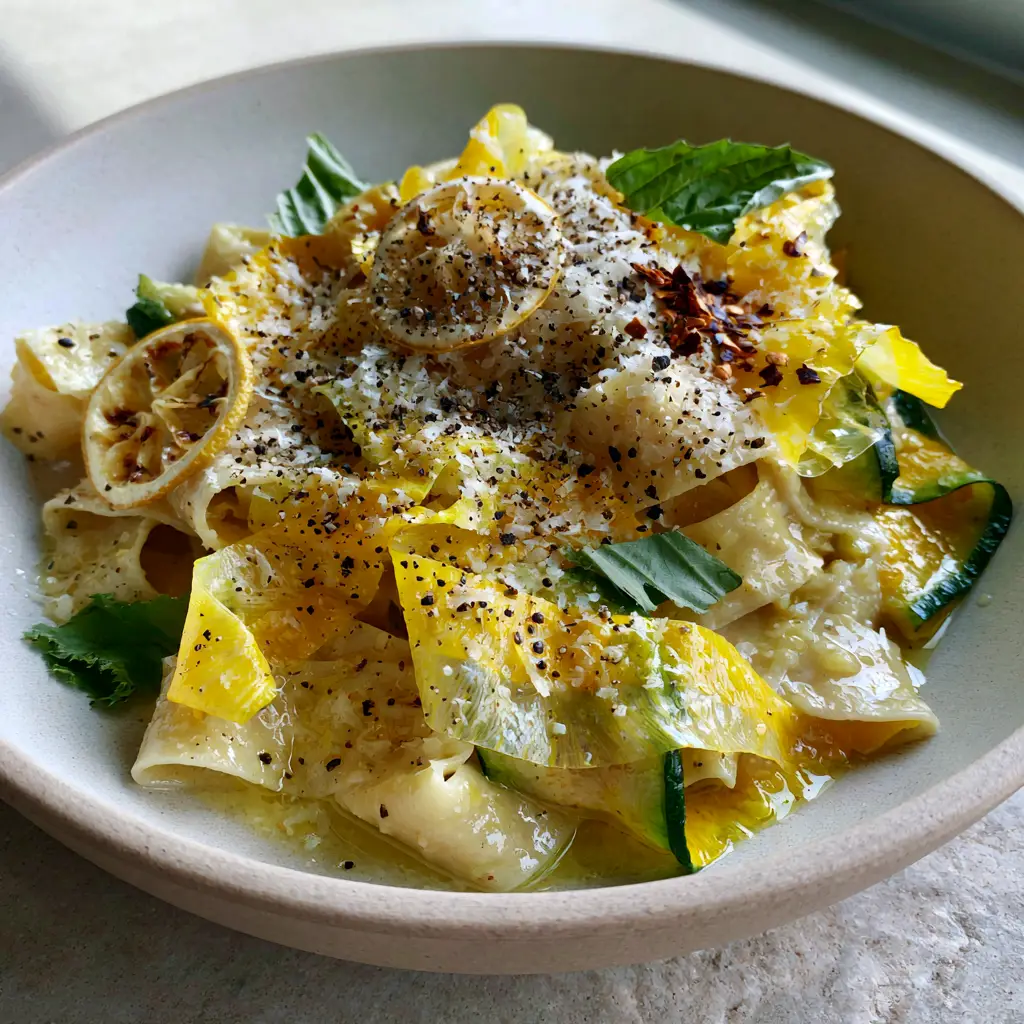
When the heat of July settles over the garden, the lemony summer squash pasta emerges as the definitive solution for high-summer dining. This isn’t your average heavy pasta dish; it is a masterclass in textures, featuring wide ribbons of pappardelle intertwined with translucent, razor-thin curls of raw zucchini and yellow squash. The result is a vibrant, glistening bowl that feels as light as a breeze while delivering a punch of citrus-forward flavor and sophisticated heat.
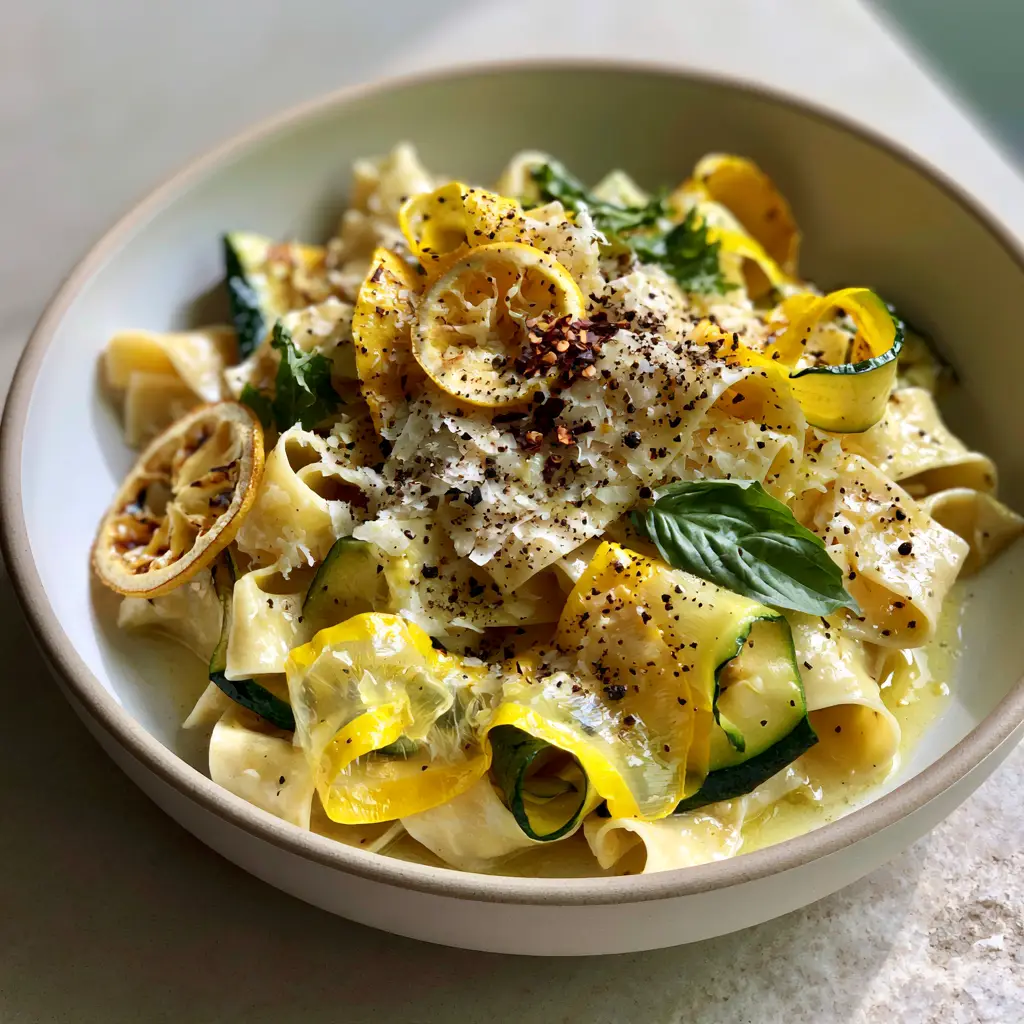
Capturing the essence of a sun-drenched afternoon, this recipe focuses on the delicate balance between the warmth of the pasta and the crisp, refreshing bite of uncooked squash. The visual appeal is undeniable—vivid greens and yellows popping against a matte ceramic backdrop, all tied together by a glossy lemon-butter emulsion that catches the natural window light. It is a dish designed for those who appreciate the intersection of rustic garden ingredients and high-end culinary technique.
Why This Vibrant Summer Pasta Recipe Works
- Textural Contrast: The “al dente” bite of traditional pappardelle provides a sturdy foundation for the paper-thin, curled ribbons of raw squash that offer a gentle, refreshing crunch.
- The Emulsion Secret: By utilizing starchy pasta water and cold butter, we create a professional-grade lemon-butter sauce that clings to every strand without becoming greasy.
- Charred Citrus Depth: Pan-searing lemon wheels caramelizes their natural sugars, transforming sharp acidity into a mellow, smoky brightness that permeates the entire dish.
- Aromatic Finishing Touches: Freshly torn basil and micro-planed parmesan provide layers of herbaceous fragrance and salty umami that elevate the simple ingredients.
Garden-Fresh Ingredients for the Ultimate Summer Pasta
To achieve the visual and culinary perfection of this lemony summer squash pasta, each ingredient must be selected for its quality and prepared with intention. We are looking for high-contrast colors and specific structural integrity.
Pappardelle Pasta: Use 12 oz (340g) of high-quality dried or fresh pappardelle. These wide, flat ribbons are essential for holding the weight of the squash and catching the glossy emulsion.
Zucchini and Yellow Squash: You will need 1 medium (200g) zucchini and 1 medium (200g) yellow summer squash. Selecting young, firm squash is vital; larger specimens tend to be seedy and watery, which will ruin the translucent, curled effect we are aiming for.
Lemons: 2 large lemons are required. One will be sliced into thin wheels for charring, while the other provides the fresh zest and juice for the sauce base.
Unsalted Butter: 4 tbsp (56g) of high-quality European-style butter. Because the ingredient list is short, the fat quality matters immensely for the flavor of the final sauce.
Extra Virgin Olive Oil: 2 tbsp (30ml) for searing the lemons and providing that signature Mediterranean sheen to the finished bowl.
Parmesan Cheese: 1/2 cup (45g) of Parmigiano-Reggiano, micro-planed. The fine, snowy texture of micro-planed cheese melts instantly into the sauce, creating a velvet-like finish.
Seasoning and Heat: 1 tsp (2g) coarse cracked black pepper and 1/2 tsp (1g) red pepper flakes. These provide the “visual cracks” and the gentle back-of-the-throat warmth that balances the citrus.
Fresh Basil: A handful of fresh leaves, torn by hand just before serving. Tearing rather than chopping prevents bruising and releases more essential oils for a brighter aroma.
Pasta Water: The “invisible” hero. Never discard your pasta water, as the starch is the glue that creates our sauce.
Essential Tools for Professional Results
To replicate the sharp, high-end food blog aesthetic of this dish, certain tools are non-negotiable. Achieving those translucent, curling squash ribbons requires more than just a sharp knife.
First, a Y-shaped peeler or a mandoline is essential for the squash. You want the ribbons so thin they are nearly see-through, allowing them to wilt slightly from the heat of the pasta without turning to mush. A Microplane is equally important for the parmesan; you want “snowflakes” of cheese, not heavy shreds. Finally, a wide stainless steel skillet or a heavy-bottomed pan is needed to properly char the lemon slices and emulsify the sauce.
Mastering the Art of the Lemon-Butter Emulsion
Preparing the Squash Ribbons
Wash and dry your squash thoroughly. Using your Y-peeler or mandoline, shave the zucchini and yellow squash lengthwise into long, thin ribbons. Stop when you reach the seedy core, as this part lacks the structural integrity needed for the “curl.” Place the ribbons in a large bowl and set aside; do not salt them yet, as salt will draw out moisture and make them soggy.
Charring the Lemon Wheels
Heat 1 tbsp (15ml) of olive oil in your skillet over medium-high heat. Place the thin lemon slices in a single layer. Sear them for 2-3 minutes until they develop deep brown, caramelized edges. This “char” is a critical visual cue and adds a smoky dimension to the lemony summer squash pasta. Remove the slices and set them aside on a plate.
Boiling the Pappardelle
Bring a large pot of heavily salted water to a rolling boil. Cook the pappardelle until it is just shy of “al dente”—usually 1-2 minutes less than the package instructions. This is crucial because the pasta will finish cooking in the sauce. Before draining, reserve at least 1 cup (240ml) of the starchy pasta water.
Building the Glossy Sauce
In the same skillet used for the lemons, add the remaining oil and the red pepper flakes. Pour in 1/2 cup (120ml) of the reserved pasta water and the fresh lemon juice. Bring to a simmer, then whisk in the cold butter one tablespoon at a time. You are looking for a visual change: the liquid should transform from watery to a pale, opaque, and glistening emulsion.
The Final Toss and Assembly
Add the hot pasta and the raw squash ribbons directly into the skillet. Using tongs, toss vigorously for 60-90 seconds. The heat from the pasta will “flash-wilt” the squash, turning them translucent while maintaining their curl. If the sauce looks dry, add more pasta water a tablespoon at a time. The result should be a light, glossy sheen coating every strand.
Expert Tips for Success
- Temperature Control: Ensure your butter is cold when adding it to the warm pasta water. This temperature difference helps create a stable emulsion rather than just melted oil.
- Don’t Cook the Squash: Avoid the temptation to sauté the squash ribbons. Their beauty lies in their raw, vibrant state; the residual heat of the pasta is all they need.
- Quality of Pepper: Use a peppermill on a coarse setting. The large “cracks” of black pepper are essential for both the flavor profile and the visual aesthetic described in our blueprint.
- Pasta Water Saltiness: Your pasta water should taste like the sea. This is the only chance to season the pasta from the inside out.
Shelf Life and Reheating Advice
This lemony summer squash pasta is best enjoyed immediately to preserve the delicate texture of the raw squash ribbons. However, if you have leftovers, store them in an airtight container in the refrigerator for up to 2 days.
To reheat, avoid the microwave, which will make the squash mushy. Instead, place the pasta in a skillet over low heat with a splash of water or a small knob of butter. Toss gently until just warmed through. Note that the squash will lose its translucency and become softer upon reheating.
What to Serve With Your Summer Pasta
To create a full Mediterranean spread, pair this dish with a light and refreshing watermelon feta salad. The sweetness of the melon perfectly counters the zing of the lemon-butter sauce. If you are looking for more ways to use up a garden bounty, consider serving these as a side to crispy zucchini tots.
For a larger gathering, this pasta serves as a beautiful main alongside a creamy corn dip for appetizers. If you prefer a full pasta-themed buffet, you can contrast this warm dish with a chilled summer garden pasta or a robust mediterranean pasta salad.
Frequently Asked Questions
While pappardelle is best for its wide surface area, you can substitute with fettuccine or tagliatelle. Avoid small shapes like penne, as they won’t tangle with the squash ribbons as effectively.
A mandoline is great for precision, but a standard Y-shaped vegetable peeler works just as well to create those thin, translucent curls.
The secret is to leave them raw. Do not cook them in the pan. Instead, toss the raw ribbons with the hot pasta at the very end; the residual heat will wilt them perfectly while maintaining a slight crunch.
You can use a high-quality vegan butter or simply more extra virgin olive oil. However, the olive oil will create a ‘slick’ rather than a creamy emulsion.
Use a stainless steel skillet or cast iron pan. Ensure the oil is hot before adding the slices and don’t move them for the first 2 minutes to allow a crust to form.
The Complete Lemony Summer Squash Pasta Recipe
Lemony Summer Squash Pasta with Shaved Zucchini Ribbons and Charred Lemon
Ingredients
Equipment
Method
- Using a Y-peeler, shave the zucchini and yellow squash into long, translucent ribbons. Stop at the seedy core.
- Heat 1 tbsp olive oil in a skillet. Sear thin lemon slices until deep golden brown and caramelized (about 2-3 mins). Set aside.
- Boil pappardelle in salted water until just shy of al dente. Reserve 1 cup of pasta water before draining.
- In the skillet, whisk 1/2 cup pasta water, lemon juice, and cold butter until a glossy, opaque emulsion forms.
- Toss the hot pasta and raw squash ribbons in the sauce for 60 seconds until wilted. Garnish with parmesan, pepper, chili, charred lemons, and basil.
Notes
Don't over-process the squash; the heat from the pasta provides enough 'cooking'.
Closing & Call to Action
This lemony summer squash pasta is a celebration of the season’s finest produce and the simple joy of a well-executed emulsion. Its bright colors and refreshing textures make it a staple for any home cook looking to impress with minimal effort but maximum visual impact. Whether you’re hosting a garden party or enjoying a quiet sunset dinner, this bowl is sure to delight.
If you enjoyed this recipe, please leave a comment below and let us know how your squash ribbons turned out! Don’t forget to follow us and share your creations on Pinterest for more culinary inspiration.