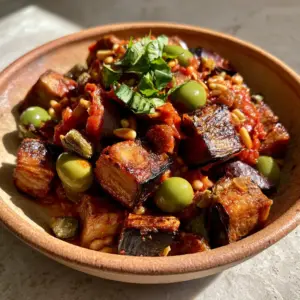
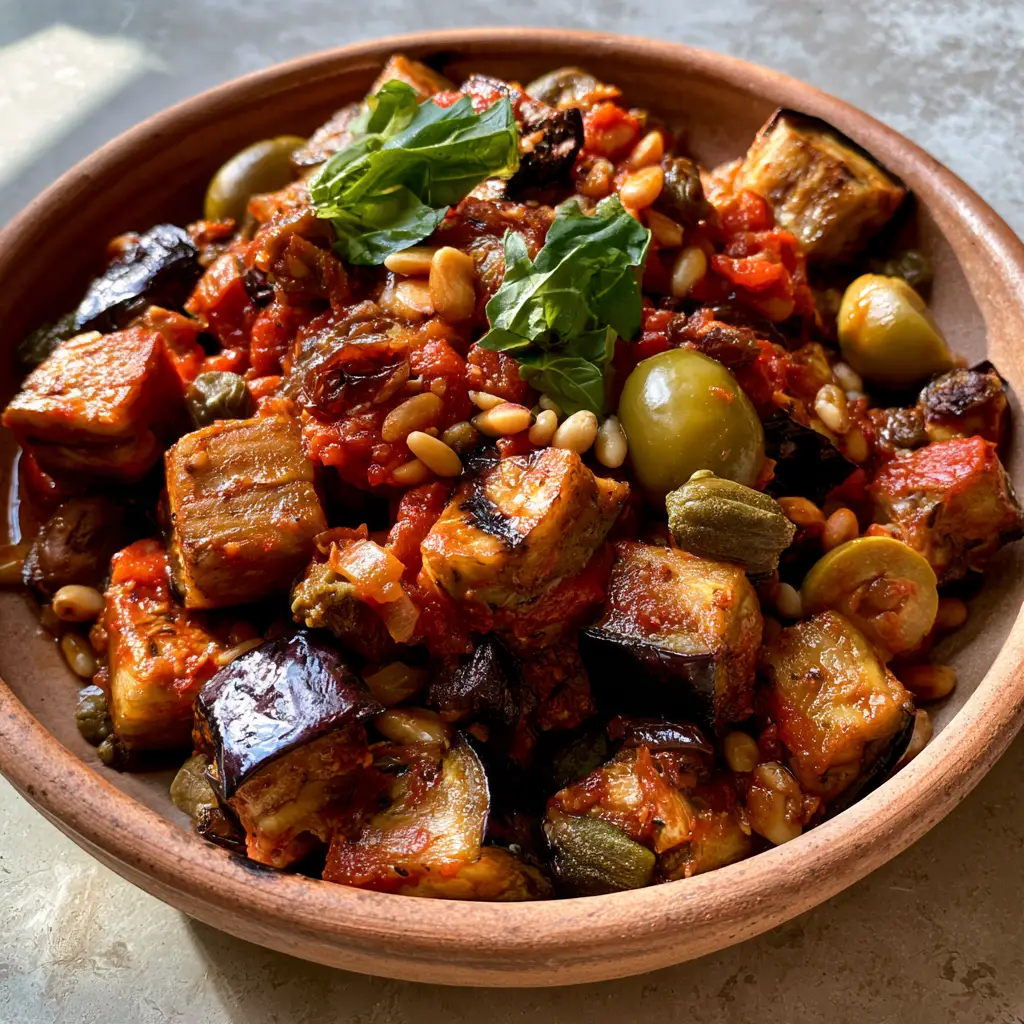
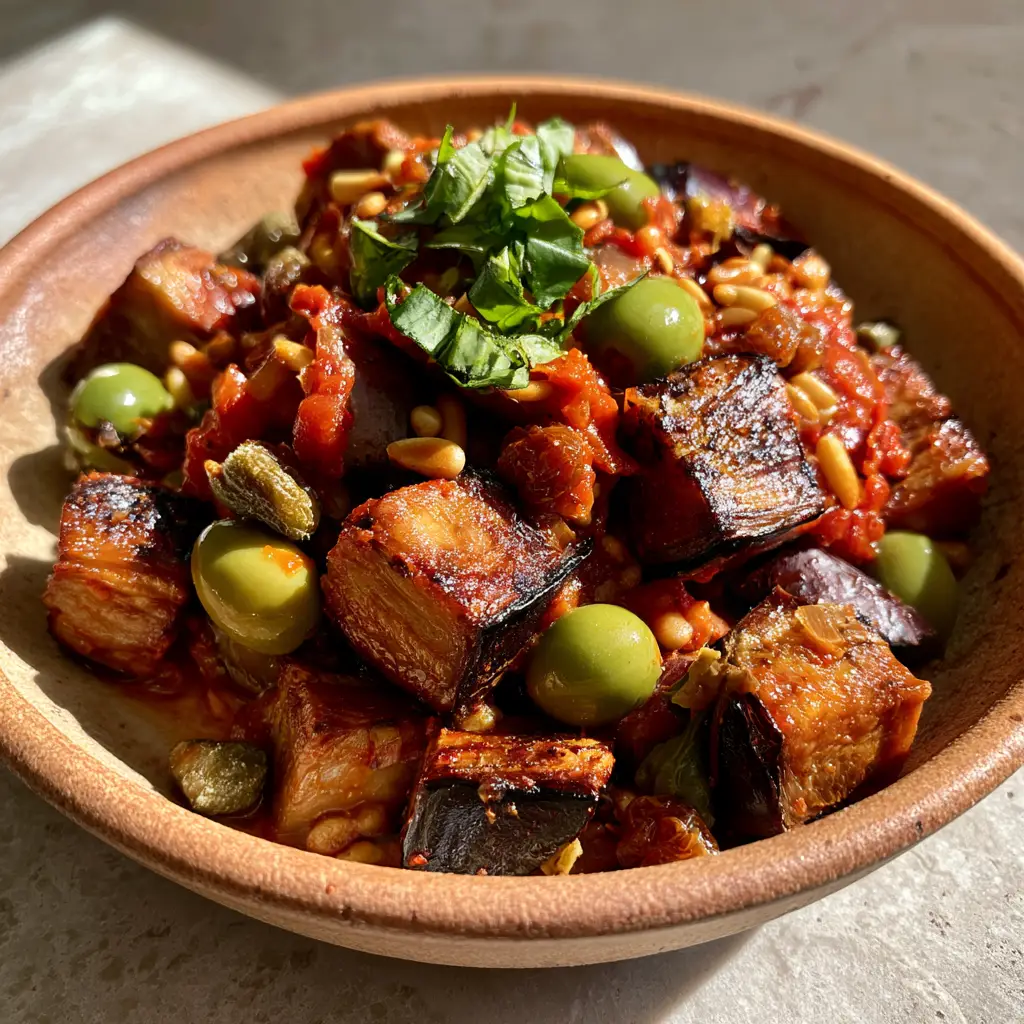
If you have been searching for the perfect Eggplant Caponata, your quest ends here. This isn’t just a vegetable side dish; it is a vibrant, glossy, and deeply flavorful masterpiece that captures the essence of Sicilian summers. Imagine roasted eggplant cubes with perfectly browned edges, tossed in a thick, vibrant red tomato glaze that balances sweetness and acidity flawlessly.
This Eggplant Caponata is designed to be the crown jewel of your table, served in a rustic terracotta plate to highlight its rich, Mediterranean colors. Whether you are looking for new plant-based recipes or a sophisticated appetizer for your next gathering, this dish delivers an explosion of texture and taste that standard recipes simply cannot match.
Why This Authentic Sicilian Caponata Recipe Works
- Perfect Texture: By roasting the eggplant instead of deep-frying, we achieve distinct cubes with a glossy, non-greasy sheen and zero mushiness.
- The Agrodolce Balance: We use a precise ratio of red wine vinegar and sugar to create that signature Sicilian sweet-and-sour “agrodolce” profile.
- Visual Contrast: The combination of plump golden raisins, toasted golden pine nuts, and fresh torn basil leaves makes this dish a Pinterest-worthy showstopper.
- Depth of Flavor: The inclusion of whole salted capers and sliced green olives provides a briny punch that cuts through the rich tomato sauce glaze.
This dish is a fantastic addition to your rotation of high-protein lunch recipes when paired with grilled chickpeas or crusty sourdough bread. It’s naturally vegan, gluten-free, and incredibly satisfying.
The Essential Ingredients for Sicilian Eggplant Caponata
Eggplant (Globe or Italian): You will need 2 large eggplants (approx. 2 lbs / 900g). The key is to cut them into uniform 1-inch (2.5cm) cubes to ensure even roasting and browned edges.
Extra Virgin Olive Oil: Use a high-quality oil (about 4 tbsp / 60ml) for roasting and sautéing. It provides the foundation for that glossy, non-greasy sheen described in our visual blueprint.
Celery: 2 stalks (100g), finely diced. The diced softened celery provides a subtle earthiness and essential structural texture to the sauce.
Yellow Onion: 1 medium onion (150g), finely diced to melt into the thick tomato sauce glaze.
Tomato Purée (Passata): 1 cup (240ml) of smooth tomato purée. This creates the “vibrant red” base that coats every cube of roasted eggplant.
Red Wine Vinegar & Sugar: 3 tbsp (45ml) vinegar and 1 tbsp (12g) sugar. This duo creates the essential agrodolce (sweet and sour) kick.
Green Olives: 1/2 cup (75g) sliced green olives (Castelvetrano are best) for a buttery, salty bite.
Salted Capers: 2 tbsp (30g) whole salted capers. Ensure you rinse them well to control the sodium levels while retaining their floral punch.
Golden Raisins: 1/4 cup (40g) plump golden raisins. We rehydrate these to ensure they are juicy bursts of sweetness in every spoonful.
Pine Nuts: 3 tbsp (30g) toasted golden pine nuts for a buttery crunch and visual elegance.
Fresh Basil: A handful of fresh torn basil leaves added at the very end to preserve their bright color and peppery aroma.
Step-by-Step Instructions for the Perfect Glossy Caponata
1. Roasting for Texture and Char
Preheat your oven to 400°F (200°C). Toss your eggplant cubes with 2 tbsp (30ml) of olive oil and a pinch of salt. Spread them in a single layer on a large baking sheet.
Roast for 20-25 minutes, tossing halfway through. You are looking for roasted eggplant cubes with browned edges. They should be tender but hold their shape perfectly—absolutely no mushiness allowed!
2. Softening the Aromatics
While the eggplant roasts, heat 2 tbsp (30ml) of olive oil in a large skillet over medium heat. Add the diced softened celery and onions. Sauté for 8-10 minutes until the vegetables are translucent and tender.
If you enjoy complex vegetable textures, this base is similar to what you might find in a refined vegan broccoli salad, focusing on the balance of crunch and softness.
3. Building the Agrodolce Sauce
Stir in the tomato purée, plump golden raisins, sliced green olives, and whole salted capers. Pour in the red wine vinegar and sprinkle the sugar over the top.
Simmer the mixture for 10 minutes until it reduces into a thick tomato sauce glaze. The smell should be a sharp, mouth-watering balance of vinegar and sweet tomatoes.
4. The Final Marriage of Flavors
Gently fold the roasted eggplant cubes into the skillet. Use a spatula to coat each piece of eggplant in the vibrant red tomato agrodolce sauce. Cook for another 2-3 minutes to allow the flavors to penetrate the eggplant.
Remove from heat and stir in the toasted golden pine nuts. Let the dish cool slightly—Caponata is best served at room temperature to let the flavors bloom.
5. The Visual Finish
Transfer the mixture to a rustic terracotta plate. Just before serving, scatter fresh torn basil leaves over the top. The contrast of the green herbs against the glossy red sauce is stunning.
Expert Tips for Pinterest-Perfect Eggplant Caponata
- Don’t Overcrowd the Pan: When roasting the eggplant, give the cubes space. If they touch, they will steam rather than develop those perfectly charred edges.
- Rinse the Capers: Always rinse salted capers. The salt they are preserved in is very intense; rinsing ensures you get the flavor without the harsh sodium.
- Toast the Nuts: Never skip toasting the golden pine nuts. A quick 3 minutes in a dry pan transforms them from bland to buttery and fragrant.
- Make It Ahead: This is one of those rare dishes that tastes significantly better the next day. The eggplant absorbs the agrodolce sauce, becoming even more flavorful.
For more plant-forward inspiration, check out our guide on easy potato side dishes to complete your Mediterranean feast.
Storage, Reheating, and Freezing
Storage: Store leftovers in an airtight container in the refrigerator for up to 5 days. The flavors will continue to develop over time.
Reheating: Caponata is traditionally served at room temperature or cold. If you prefer it warm, gently heat it in a skillet over low heat with a splash of water to loosen the glaze.
Freezing: While you can freeze Eggplant Caponata, the texture of the eggplant may become slightly softer upon thawing. It will still be delicious but may lose those distinct “cubes.” Store in a freezer-safe bag for up to 2 months.
What to Serve With This Sicilian Classic
This dish is incredibly versatile. We love serving it atop toasted ciabatta as a bruschetta. It also pairs beautifully with roasted proteins. If you are following a raw or light diet, try it alongside some raw vegan dinners for a burst of cooked-yet-vibrant flavor.
It also makes a surprising and delicious topping for a simple pasta or a side for a Mediterranean-style grain bowl.
Frequently Asked Questions
Yes, but balsamic is sweeter and more syrupy. You may want to reduce the added sugar by half to maintain the proper agrodolce balance.
No, the skin provides essential structure and color. When roasted, the skin becomes tender and helps the cubes hold their shape in the sauce.
Caponata is traditionally served at room temperature or slightly chilled. This allows the complex sweet and sour flavors to fully develop.
Mushy caponata usually happens when eggplant is boiled or crowded in a frying pan. Roasting the cubes at a high temperature ensures they develop charred edges and maintain their structure.
Authentic Sicilian Eggplant Caponata Recipe Card
Eggplant Caponata: The Ultimate Authentic Sicilian Agrodolce Recipe
Ingredients
Equipment
Method
- Toss eggplant cubes with olive oil and salt. Roast at 400°F (200°C) for 20-25 minutes until browned on the edges.
- Sauté diced celery and onions in a large skillet with olive oil until softened and translucent, about 8-10 minutes.
- Add tomato passata, vinegar, sugar, raisins, olives, and capers. Simmer for 10 minutes to create a thick glaze.
- Fold the roasted eggplant into the sauce. Cool to room temperature. Top with toasted pine nuts and fresh torn basil.
Notes
Use high-quality Castelvetrano olives for a milder, buttery flavor.
Save This Recipe to Pinterest!
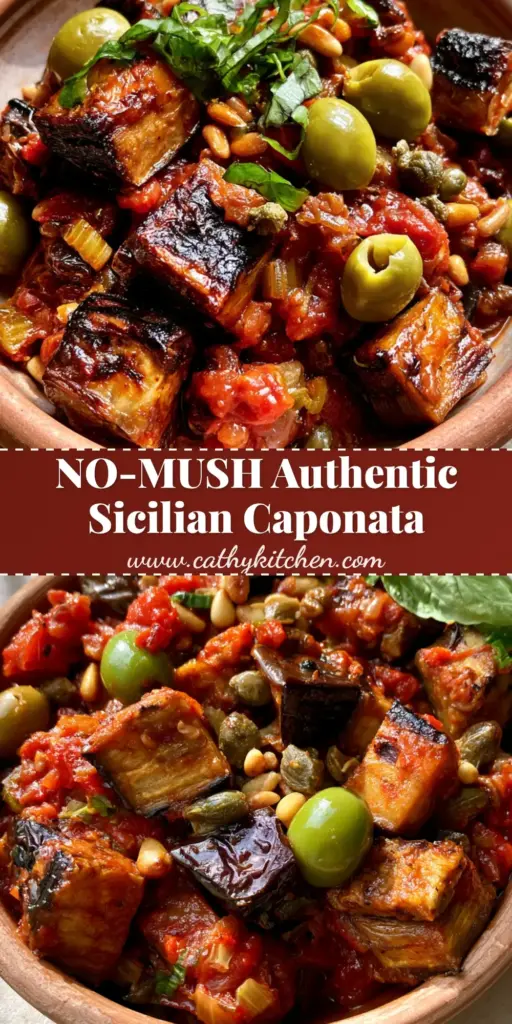
Do you love authentic Italian flavors? Save this Eggplant Caponata recipe to your Pinterest boards so you always have it on hand! We would love to see how your dish turned out—take a handheld smartphone photo of your rustic terracotta plate and share it in the comments below. Don’t forget to follow cathy_kitchen_official for more culinary inspiration and leave a 5-star rating if you loved this agrodolce delight!