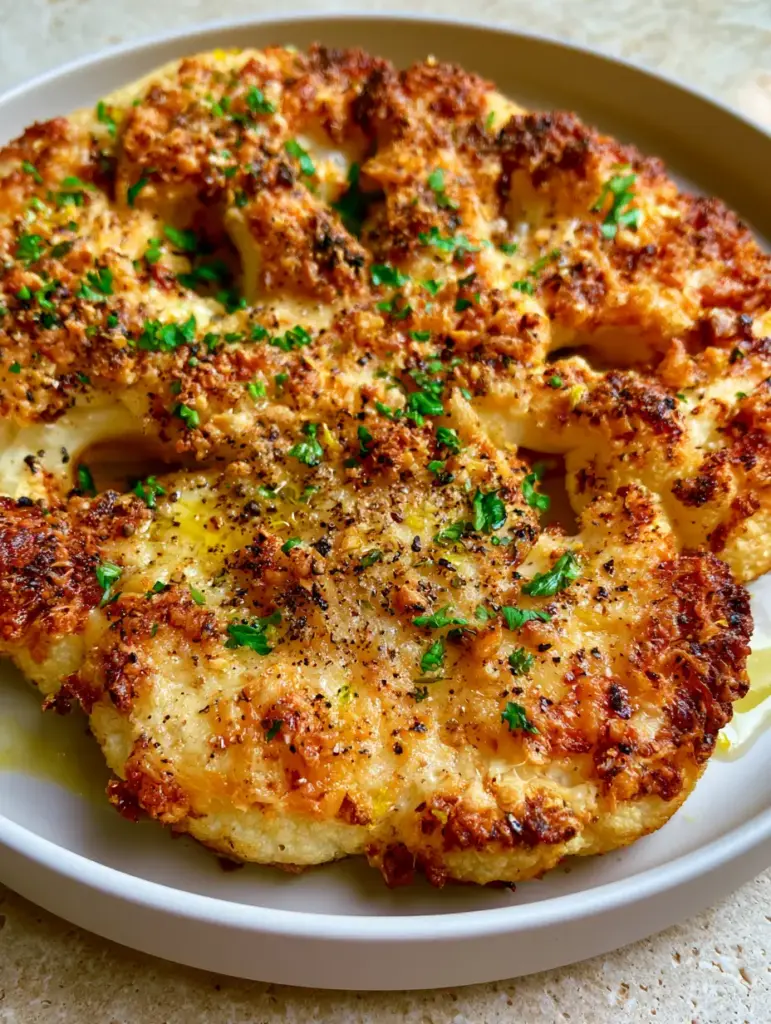
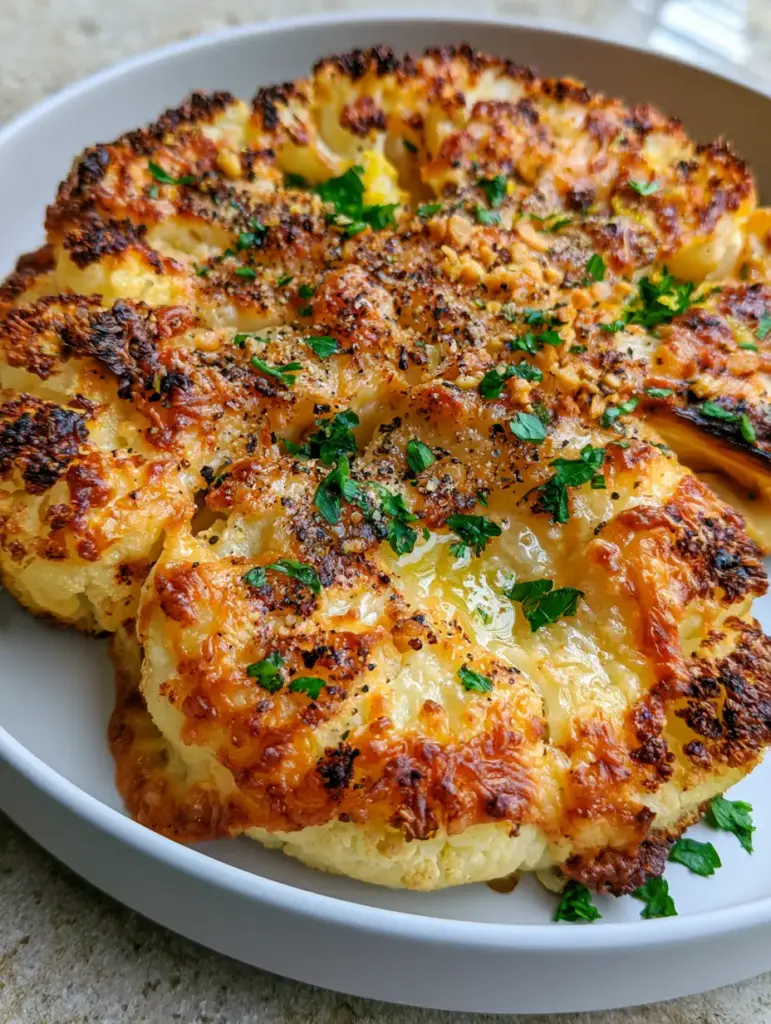
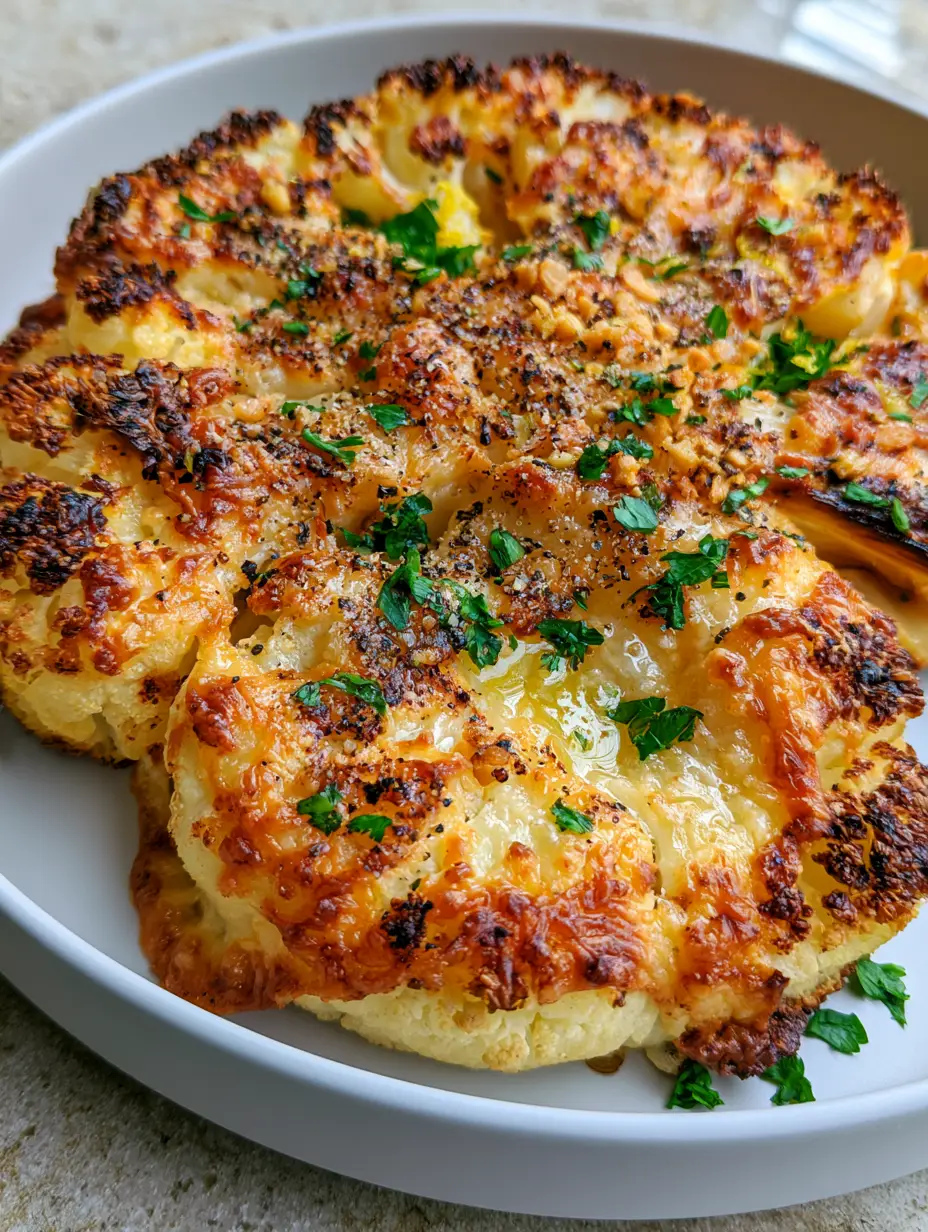
There is a specific culinary magic that happens when a humble head of cauliflower meets high-intensity dry heat. These Baked Cauliflower Steaks aren’t just a vegetarian alternative; they are a masterclass in texture, featuring deep golden-brown caramelized edges and a heavy, bubbly Parmesan cheese crust that delivers an audible crunch with every bite.
Inspired by the modern minimalist aesthetic of professional plating, this recipe focuses on the forensic details of roasting. We are looking for that specific POV: thick-cut slices where the florets have charred slightly, the surface glimmers with micro-planed lemon zest, and a fine dusting of toasted garlic provides a savory backbone to the natural sweetness of the vegetable.
If you have been searching for a way to make vegetables the undisputed star of the dinner table, these Baked Cauliflower Steaks are the answer. By following a few scientific principles regarding moisture control and heat distribution, you can transform a simple brassica into a gourmet centerpiece that looks as stunning as a handheld smartphone photo from a high-end bistro.
Why This Crispy Roasted Cauliflower Recipe Works
- The Shattered Crust Technique: By using finely grated Parmesan and a high-heat roasting method, we create a bubbly, lace-like cheese texture that is visually stunning and incredibly savory.
- Maillard Reaction Mastery: We leverage light olive oil and precise oven temperatures to ensure the edges of the florets are charred and caramelized, not just softened.
- Vibrant Flavor Finishing: The addition of fresh flat-leaf parsley and micro-planed lemon zest at the very end preserves the bright green color and citrus oils that would otherwise dissipate in the oven.
- Substantial Mouthfeel: Cutting the cauliflower into thick “steaks” ensures a tender, meaty interior that contrasts perfectly with the crispy exterior.
The Anatomy of a Perfect Golden-Brown Cauliflower Steak
To achieve the visual result of a thick, roasted cauliflower steak with deep golden-brown edges, you need specific ingredients that act as heat conductors and flavor enhancers. Every component in this list serves a forensic purpose in the final presentation.
Large Head of Cauliflower: You will need a dense, heavy head to get at least 3-4 thick-cut “steaks” from the center where the core holds the florets together. The outer edges that crumble can be saved for a vegetable-based side dish.
Light Olive Oil: We use light olive oil rather than extra virgin for its higher smoke point. This allows the cauliflower to roast at high temperatures without the oil breaking down and becoming bitter.
Finely Grated Parmesan Cheese: This is the secret to the “shattered” crust. Use a micro-plane to create a snowy texture that melts into a bubbly, golden lattice across the surface of the steak.
Garlic Powder: Unlike fresh garlic which can burn and turn acrid at high heat, garlic powder provides that “toasted garlic” dusting seen in the visual prompt, offering a uniform savory profile.
Fresh Flat-leaf Parsley: Always use flat-leaf (Italian) parsley for its superior flavor and bright green visual appeal. Chop it finely just before serving to maintain its structural integrity.
Lemon Zest: The micro-planed zest of a fresh lemon provides a “glisten” on the surface. These tiny citrus oil deposits cut through the richness of the cheese and oil.
Flaky Sea Salt and Cracked Black Pepper: We use flaky salt for visual texture and “pops” of seasoning, while coarse black pepper adds a necessary heat and visual contrast against the white cauliflower.
Essential Tools for Roasted Vegetable Excellence
To recreate the modern matte white ceramic dish presentation seen in professional food photography, you need the right equipment. A heavy-duty rimmed baking sheet is non-negotiable for even heat distribution.
You will also need a sharp Chef’s knife to slice through the dense core of the cauliflower without shattering the delicate florets. A micro-plane is essential for both the Parmesan and the lemon zest to ensure the particles are fine enough to create that “dusting” effect.
How to Slice and Prep Your Cauliflower Center-Cuts
Step 1: The Precision Slice
Remove the outer green leaves from the cauliflower but keep the stem intact. Place the cauliflower on a cutting board, stem-side down, and slice it in half through the center of the core.
From the flat cut side of each half, slice a 1-inch (2.5cm) thick “steak.” You should get 2-4 beautiful steaks from one large head; the remaining florets can be used for an alternative crispy snack.
Step 2: The Oil and Seasoning Foundation
Brush both sides of each steak generously with light olive oil. This acts as the conductor for the heat, ensuring the “deep golden-brown caramelized edges” described in the visual blueprint.
Season both sides with the toasted garlic powder, cracked black pepper, and a light dusting of sea salt. Ensure the seasoning gets into the nooks and crannies of the florets for maximum flavor penetration.
Step 3: Creating the Bubbly Parmesan Crust
Place the steaks on a parchment-lined baking sheet and roast at 400°F (204°C) for 15 minutes. Flip the steaks carefully using a wide spatula to keep them whole.
Once flipped, pile the finely grated Parmesan cheese onto the top surface of each steak. Return to the oven for another 10-15 minutes until the cheese is bubbly, golden, and looks “shattered” and crunchy.
Step 4: The Finishing Forensic Details
Remove the steaks from the oven once the edges are charred and the cheese is crisp. Immediately sprinkle with the finely chopped parsley and the micro-planed lemon zest.
Finish with an extra crack of black pepper and a final tiny drizzle of olive oil to create that signature glisten. Serve immediately on a minimalist matte white plate to let the textures stand out.
Pro Tips for the Ultimate Cauliflower Texture
- Don’t Overcrowd the Pan: If the steaks are too close together, they will steam instead of roast. Space them out to ensure the air can circulate and create those charred floret edges.
- The Core is Key: Only the slices that contain a portion of the central core will stay together as “steaks.” Don’t throw away the loose florets; roast them alongside for extra crunch.
- High Heat is Non-Negotiable: You need at least 400°F (204°C) to achieve the Maillard reaction. If your oven runs cool, the cauliflower will turn mushy before it turns golden.
- Use Freshly Grated Cheese: Pre-shredded cheese is coated in potato starch to prevent clumping, which prevents the “bubbly, shattered” texture we want. Grate it yourself!
Storage and Reheating Advice
While these Baked Cauliflower Steaks are best served fresh for maximum crunch, you can store leftovers in an airtight container for up to 3 days. To reheat, avoid the microwave, which will make the crust soggy.
Instead, place the steaks back in a 375°F (190°C) oven or an air fryer for 4-5 minutes. This will revive the Parmesan crust and restore the charred texture of the edges.
What to Pair with Your Crispy Cauliflower
These steaks are hearty enough to serve as a main course, but they also pair beautifully with other Mediterranean-inspired dishes. For a light lunch, serve them alongside a traditional Greek salad or a bowl of Horiatiki.
If you are looking for a multi-course vegetable feast, consider starting with some oven-baked zucchini balls or a side of cheesy zucchini bake. For a protein-heavy pairing, these steaks act as a fantastic low-carb side to grilled chicken or fish.
Frequently Asked Questions
Yes! Cauliflower is naturally low-carb, and with the high-fat Parmesan crust and olive oil, these are an excellent choice for a ketogenic or low-carb diet.
Unfortunately, no. Frozen cauliflower has too much moisture and is already broken into florets. To get the ‘steak’ structure and the deep caramelization, fresh cauliflower is required.
The key is using finely micro-planed Parmesan and roasting at a high temperature (400°F). Avoid pre-shredded cheese, as the anti-clumping agents prevent that ‘shattered’ bubbly texture.
Light olive oil or avocado oil are best because of their high smoke points. Extra virgin olive oil can sometimes burn and turn bitter at the high temperatures needed for these steaks.
Cauliflower steaks only stay together if they are cut through the central core. Use a large head and slice 1-inch thick sections through the middle. Any florets that fall off can still be roasted as ‘bites’!
The Ultimate Baked Cauliflower Steaks Recipe Card
Baked Cauliflower Steaks with a Shatteringly Crispy Parmesan Crust
Ingredients
Equipment
Method
- Preheat your oven to 400°F (204°C). Line a large rimmed baking sheet with parchment paper for easy cleanup and to prevent sticking.
- Trim the leaves from the cauliflower. Slice the head in half through the core, then cut 1-inch thick slices from each half, ensuring a piece of the core is attached to each slice.
- Brush both sides of the steaks with olive oil and season with garlic powder, salt, and pepper. Roast for 15 minutes until the bottoms are starting to brown.
- Flip the steaks carefully. Mound the finely grated Parmesan onto each steak. Roast for another 10-15 minutes until the cheese is bubbly and the edges are charred golden-brown.
- Immediately sprinkle with fresh parsley and lemon zest. Finish with a final tiny drizzle of olive oil for a glossy glisten.
Notes
Don't skip the lemon zest; it provides the essential brightness to balance the salty Parmesan.
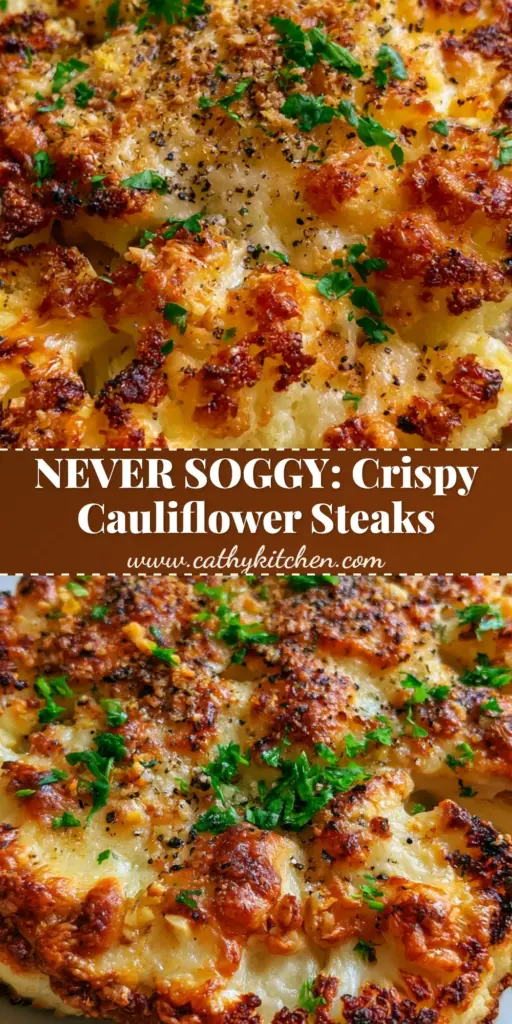
Master the Roast in Your Own Kitchen
Transforming a simple head of cauliflower into these Baked Cauliflower Steaks is a rewarding culinary experience that proves technique is just as important as ingredients. The combination of the bubbly Parmesan crust and the bright lemon zest creates a flavor profile that is both rich and refreshing.
We would love to see your results! If you make this recipe, please leave a comment below and share your photos. Don’t forget to follow us and save this recipe to your boards on Pinterest so you always have this crispy vegetable masterpiece at your fingertips.