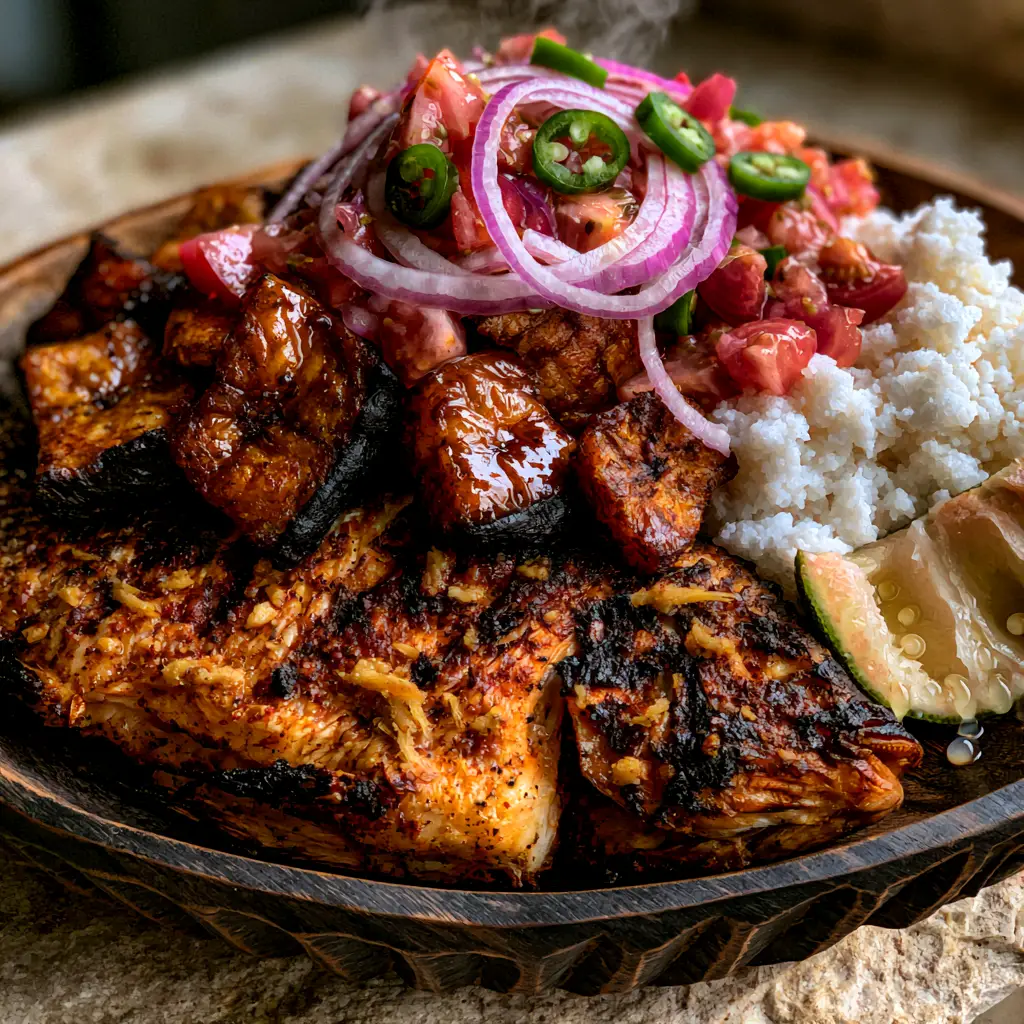
Mastering authentic Ivorian recipes at home begins with understanding the delicate balance of heat, fermentation, and caramelization that defines the Ivory Coast’s culinary landscape. This iconic dish—featuring charred whole tilapia, sweet fried plantains, and fluffy fermented cassava—is the heartbeat of Abidjan’s vibrant street food scene.
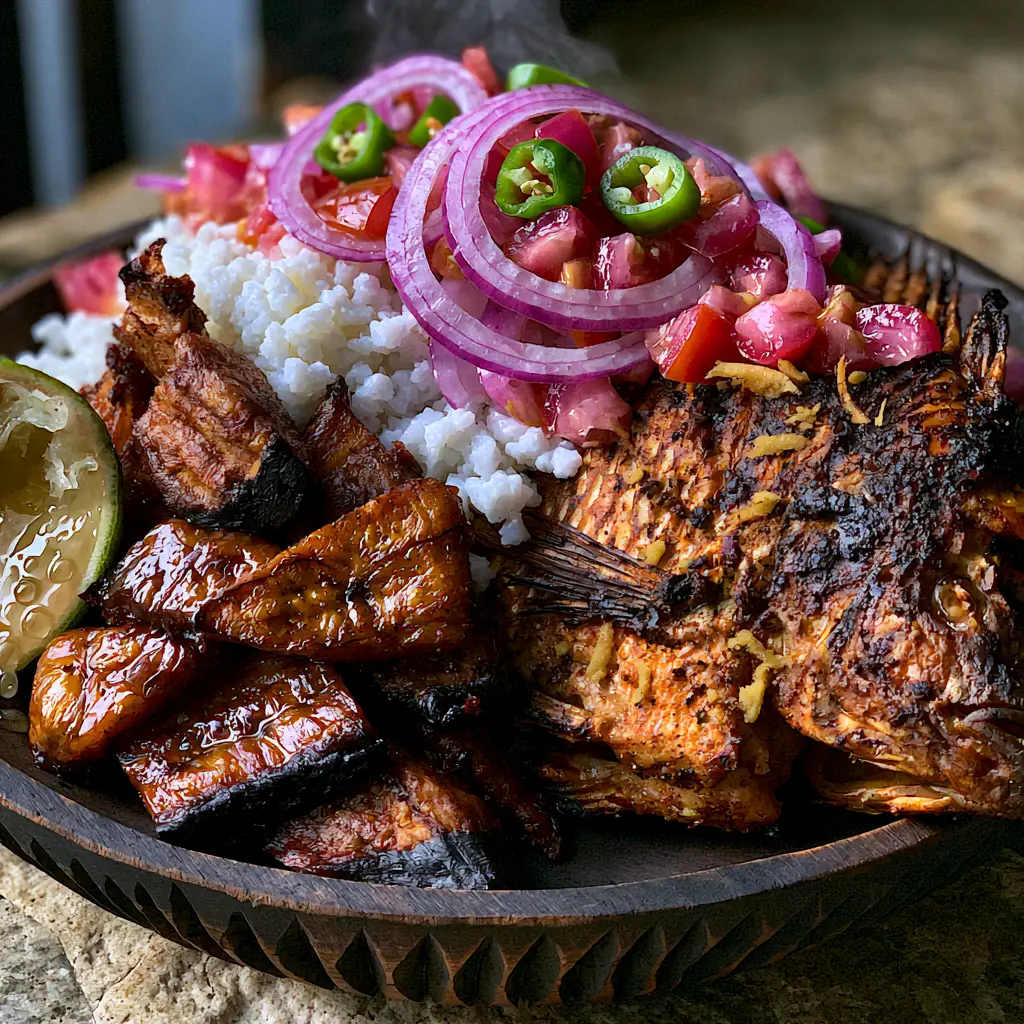
Imagine a handheld smartphone photo quality meal: a whole Tilapia with deeply charred, crispy golden-brown skin, seasoned with visible flecks of ginger and garlic that sizzle under the light. The steam rises from the fish as you break into the moist white flakes, perfectly contrasted by the snow-white, fluffy mound of Attiéké grains.
Whether you are a seasoned traveler or a curious home cook, this recipe delivers a restaurant-quality experience on a dark hand-carved wooden bowl. Let’s dive into the techniques required to achieve that professional, high-resolution food photography finish in your own kitchen.
Why This West African Feast Works
- Textural Contrast: You get the crunch of the crispy grilled fish skin against the cloud-like texture of steamed fermented cassava grains.
- Flavor Profile: A masterclass in balancing the deep, earthy caramelization of fried plantains with the bright, sharp acidity of a raw onion and tomato salsa.
- Aromatic Depth: The infusion of minced ginger and crushed garlic into the fish scales creates an irresistible fragrance that permeates the entire dish.
- Nutritional Powerhouse: Like many of our other high-protein recipes, this meal focuses on lean white fish and complex carbohydrates.
Essential Components for Authentic Ivorian Flavor
To recreate the visual recipe blueprint exactly, you must source specific ingredients that provide the “snow-white” appearance of the grains and the “ruby-red” pop of the salsa. Using fresh, high-quality produce is non-negotiable for this level of culinary forensics.
Whole Tilapia: Look for fresh, clear-eyed fish weighing about 1.5 lbs (680g). The skin must be intact to achieve that signature deep char and golden-brown crispness during the grilling process.
Fermented Cassava Grains (Attiéké): This is the soul of the dish. These tiny, couscous-like grains have a slightly sour, fermented tang that cuts through the richness of the fried components.
Ripe Plantains: For the Alloco, you need plantains with yellow skin and heavy black spotting. This ensures they are sweet enough to result in deeply caramelized, glossy fried plantain chunks with dark edges.
Aromatic Base: Minced ginger and crushed garlic are the “invisible” workhorses here. They are rubbed into the fish scores to provide both flavor and those beautiful toasted flecks seen in the visual prompt.
The Salsa Trio: Paper-thin red onion rings, diced vine-ripened ruby-red tomatoes, and sliced green scotch bonnet peppers. This provides the heat and the “vibrant salsa” crown described in the blueprint.
Foundational Additions: You will need 1/2 cup (120ml) of high-smoke point vegetable oil for frying the plantains and 2 tbsp (30ml) of olive oil for brushing the fish. Don’t forget 1 tsp (5g) of sea salt to enhance every layer.
Professional Tools for the Perfect Char
Achieving the look of a handheld smartphone photo requires the right equipment to manage heat. You aren’t just cooking; you are engineering textures.
A heavy-duty outdoor grill or a cast-iron grill pan is essential for those deep char marks. If you prefer a modern twist, you might explore air fryer recipes for the plantains, though traditional deep-frying yields the glossiest finish.
You will also need a steamer basket for the Attiéké. Since these are fermented cassava grains, they need gentle indirect heat to become fluffy and “snow-white” without turning into a paste.
Step-by-Step Guide to Ivorian Grilled Fish and Alloco
Preparing the Aromatic Tilapia
Start by scaling and cleaning the tilapia, leaving the head and tail on for a traditional presentation. Use a sharp knife to make three diagonal slashes on each side of the fish, cutting down to the bone.
Mix 2 tbsp (30g) of minced ginger and 1 tbsp (15g) of crushed garlic with 1 tbsp (15ml) of oil and a pinch of salt. Rub this paste deep into the scores; these are the visible flecks that will toast to a golden brown under the flame.
Let the fish marinate for at least 30 minutes. This allows the enzymes in the ginger to slightly tenderize the fish while the garlic infuses the flesh with a savory backbone.
Mastering the Deeply Caramelized Alloco
Peel your ripe plantains and cut them into 1-inch (2.5cm) cubes. In a heavy skillet, heat 1 cup (240ml) of vegetable oil to 350°F (175°C).
Fry the plantain chunks in batches. You are looking for a specific sensory cue: the edges should turn a dark, mahogany brown while the centers remain soft and glossy. This caramelization is what provides the sweet counterpoint to the spicy peppers.
Drain the Alloco on paper towels and immediately sprinkle with a touch of sea salt. The salt creates a “salted caramel” effect on the exterior of the fruit.
Steaming the Snow-White Attiéké
If using dried or frozen Attiéké, place it in a fine-mesh steamer basket over simmering water. Cover tightly and steam for 10–15 minutes.
Use a fork to fluff the grains every 5 minutes. The goal is to achieve a texture that is light, airy, and distinctly white. If the grains seem dry, sprinkle with 1 tbsp (15ml) of cool water and continue steaming until tender.
Grilling for Visual Impact
Place the seasoned tilapia on a preheated, well-oiled grill over medium-high heat. Listen for the immediate sizzle—that is the sound of the skin dehydrating and crisping.
Grill for 6–8 minutes per side. Use a wide spatula to flip carefully to keep the skin intact. You are looking for a “deeply charred, crispy golden-brown skin” that yields slightly when pressed but remains firm.
During the last two minutes of cooking, place a lime wedge on the grill nearby to lightly char the citrus, which concentrates its juice for the final plating.
Expert Tips for Success with Ivorian Recipes
- Dry the Fish: Before applying the ginger-garlic paste, pat the tilapia bone-dry with paper towels. Moisture is the enemy of crispy skin.
- Salsa Freshness: Only slice the red onions and scotch bonnets right before serving. This keeps the onions “paper-thin” and crisp rather than wilted.
- The Lime Squeeze: When plating, squeeze the lime wedge just enough so “visible juice droplets” rest on the fish skin, as seen in professional food photography.
- Heat Control: If the scotch bonnets are too intense, remove the seeds. For a different flavor profile, you might compare this to north african recipes which often use harissa for heat.
Storage and Reheating Advice
Ivorian recipes involving fried plantain and steamed cassava are best enjoyed immediately. However, the grilled fish can be stored in an airtight container for up to 2 days.
To reheat the fish while maintaining the crispy skin, use an oven at 375°F (190°C) for 10 minutes. Avoid the microwave, as it will turn the beautifully charred skin rubbery. The Attiéké can be re-steamed for 3 minutes to regain its fluffiness.
What to Serve With Ivorian Grilled Fish
While the combination of fish, Alloco, and Attiéké is a complete meal, you can expand the table with other fresh sides. The bright acidity of a greek salad or a traditional horiatiki offers a refreshing palate cleanser between bites of spicy fish.
If you have leftover zucchini from your garden, consider serving alongside zucchini balls for an extra vegetable boost that complements the fried textures of the Alloco.
Frequently Asked Questions
While they provide the authentic heat found in Ivorian recipes, you can substitute them with habanero peppers or omit the seeds to reduce the spice level without losing the floral aroma.
Yes, you can air fry plantain cubes at 400°F (200°C) for 10-12 minutes, though you may need to toss them in a tablespoon of oil to achieve the glossy, dark edges characteristic of traditional Alloco.
To get crispy skin, pat the fish completely dry before seasoning, use a high-heat grill, and avoid moving the fish once it touches the grill until it naturally releases from the grates.
Attiéké is a traditional Ivorian side dish made from fermented cassava pulp. It has a texture similar to couscous but with a slightly sour, tangy flavor due to the fermentation process, which pairs perfectly with rich fried foods.
Attiéké is commonly found in the frozen or dry goods section of African grocery stores or specialty international markets. It is often sold in vacuum-sealed bags.
Authentic Ivorian Grilled Tilapia & Alloco Recipe
Ivorian Recipes: The Ultimate Crispy Grilled Tilapia with Alloco and Attiéké
Ingredients
Equipment
Method
- Score the cleaned tilapia diagonally. Rub the minced ginger, crushed garlic, salt, and oil into the cuts. Let sit for 30 minutes.
- Place tilapia on a hot, oiled grill. Cook for 6-8 minutes per side until the skin is deeply charred and crispy golden-brown.
- Dice plantains into 1-inch cubes. Fry in 350°F (175°C) oil until deeply caramelized with dark edges and glossy centers.
- Place cassava grains in a steamer. Steam for 10-15 minutes, fluffing with a fork until they are snow-white and light.
- Arrange the fish, Alloco, and Attiéké in a bowl. Top with thin red onion rings, diced ruby-red tomatoes, and sliced green scotch bonnets. Add a lime wedge with visible juice droplets.
Notes
Always pat the fish dry before marinating to ensure the skin crisps up perfectly.
Experience the Flavors of the Ivory Coast
This exploration of Ivorian recipes brings the soul of West African cuisine into your home. The combination of the charred tilapia, the sweet Alloco, and the tangy Attiéké creates a sensory experience that is both comforting and exotic.
We encourage you to share your results! Did you manage to get that perfect golden-brown char on the fish skin? Let us know in the comments below. For more visual inspiration and to see our latest culinary creations, be sure to follow us and share this recipe on Pinterest.