There is a specific culinary magic that happens when high-heat searing meets a velvety, citrus-infused cream sauce. This Chicken Orzo Pasta Recipe isn’t just another weeknight meal; it is a masterclass in texture and brightness, designed to look as stunning on your table as it does in a professional food shoot.
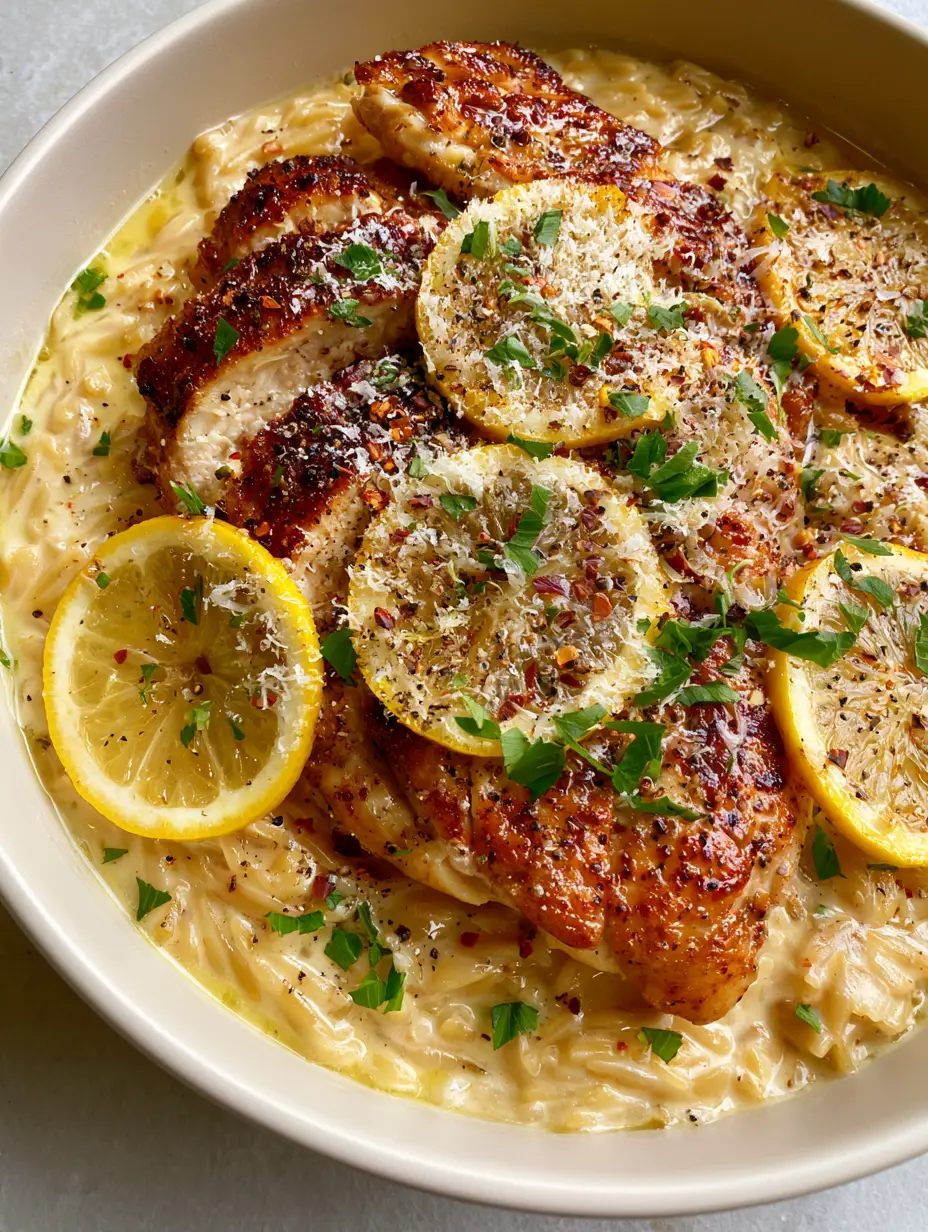
Imagine tender, rice-shaped orzo pasta submerged in a thick, glossy lemon-garlic cream sauce that clings to every grain. Topped with thick slices of chicken breast boasting a deep golden-brown sear and crispy edges, this dish is a sensory powerhouse.
The final touch—a generous dusting of micro-planed parmesan cheese flakes and finely chopped fresh flat-leaf parsley—creates a vibrant contrast against the creamy foundation. Whether you are cooking for a special date night or a busy Tuesday, this recipe delivers high-end restaurant quality with one-pan simplicity.
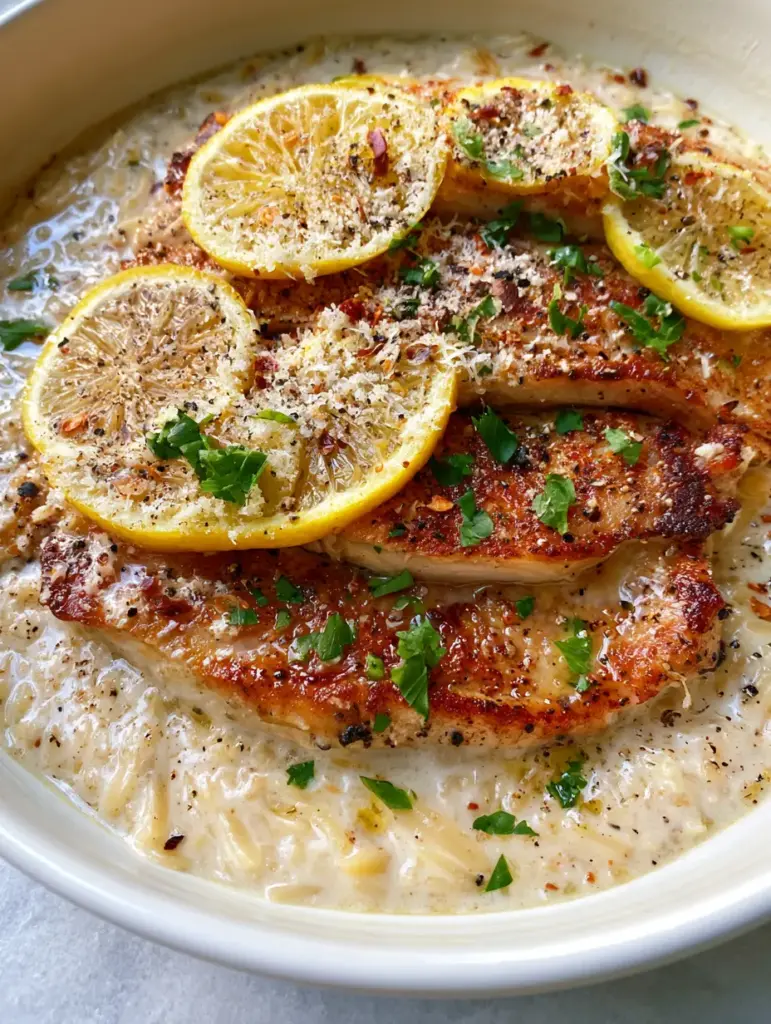
The Anatomy of a Perfect Creamy Chicken Orzo
Success in this Chicken Orzo Pasta Recipe relies on the harmony of three distinct elements: the sear, the starch, and the acid. By following professional techniques, you ensure the chicken remains juicy while the orzo achieves a “risotto-style” creaminess without the constant stirring.
- The Golden-Brown Crust: We utilize a high-smoke point oil and butter combination to achieve that signature deep bronze exterior on the chicken breast.
- Glossy Emulsification: The secret to the “velvety” sauce seen in the visuals is the interaction between the heavy cream and the natural starches released by the orzo pasta.
- Bright Citrus Balance: Fresh lemon wheels and juice cut through the richness of the cream, ensuring every bite feels light and balanced.
- Textural Garnishes: Using a micro-plane for the parmesan creates airy flakes that melt instantly into the sauce, providing a salty, umami finish.
The Flavor Blueprint: Ingredients and Essential Components
Every ingredient in this list serves a structural or flavor-based purpose to replicate the high-gloss, vibrant result shown in the visual prompt. Ensure your ingredients are at room temperature before you begin for the smoothest sauce transition.
1 lb (450g) Boneless Skinless Chicken Breasts: We slice these into thick, uniform pieces to ensure they sear quickly without drying out the interior. A deep sear provides the “crispy edges” mentioned in our visual blueprint.
1.5 cups (300g) Dried Orzo Pasta: This small, rice-shaped pasta is the foundation of the dish, acting as a sponge for the garlic-infused cream sauce. Unlike larger pasta shapes, orzo releases enough starch to thicken the sauce naturally.
2 cups (480ml) Chicken Stock: This provides the savory depth needed to cook the pasta. Using a high-quality stock ensures the orzo is seasoned from the inside out.
1 cup (240ml) Heavy Cream: Essential for achieving that “thick, glossy, velvety” texture. The high fat content prevents the sauce from breaking when mixed with the acidic lemon juice.
2 tbsp (30g) Unsalted Butter & 1 tbsp (15ml) Olive Oil: This duo is used for searing. The oil prevents the butter from burning, while the butter provides the fat solids needed for that golden-brown color.
4 cloves Fresh Garlic, minced: Garlic is the aromatic backbone here. It should be fragrant and translucent, never browned, to keep the sauce looking clean and bright.
2 Fresh Lemons: You will use one for juice and the other to create the “thin, vibrant yellow lemon wheels” that serve as the primary visual garnish. The acidity is non-negotiable for balancing the cream.
0.5 cup (45g) Micro-planed Parmesan Cheese: Avoid the pre-shredded stuff in a green can. Freshly grated parmesan flakes provide the elegant, “generous dusting” look and superior melt-ability.
0.25 cup (10g) Fresh Flat-Leaf Parsley, finely chopped: This provides the “bright green” contrast against the white sauce and yellow lemons. Parsley also adds a subtle peppery freshness.
Seasoning Trio: 1 tsp (6g) Kosher salt, 1 tsp (2g) cracked black pepper, and 0.5 tsp (1g) red chili flakes. The pepper and flakes are scattered at the end for visual texture and a gentle heat.
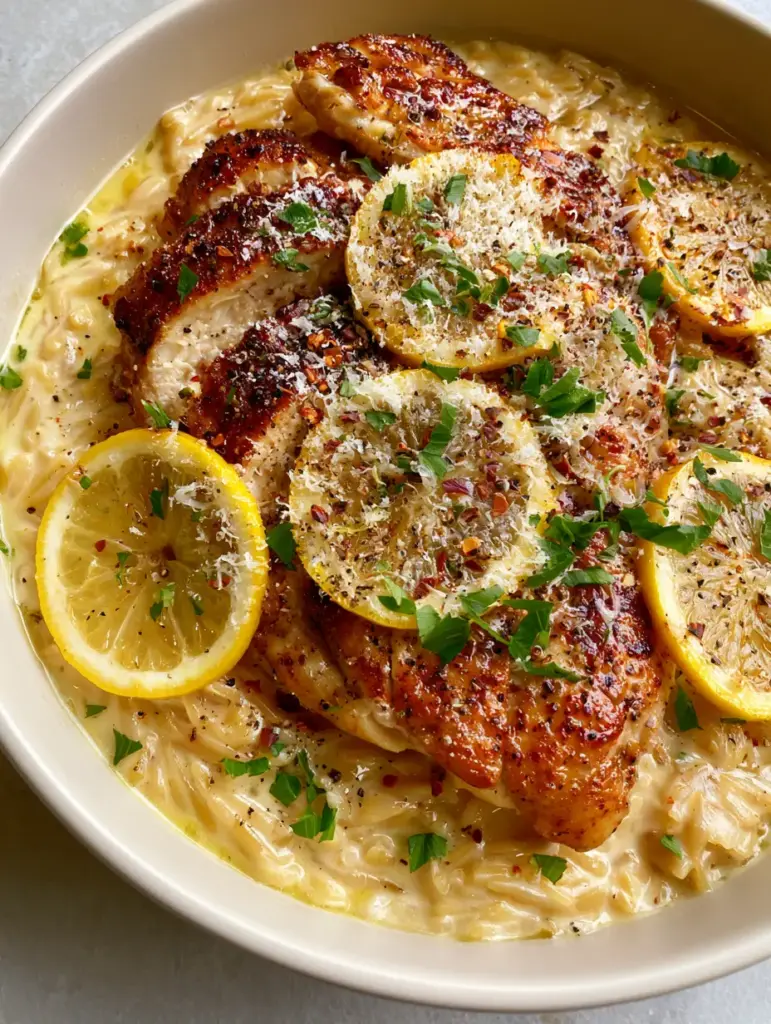
Professional Tools for a Gallery-Ready Dish
To achieve the “handheld smartphone photo” aesthetic of a high-end food blog, your choice of cookware matters. A shallow, matte white ceramic skillet is recommended, as it allows the colors of the lemon and parsley to pop against a neutral background.
A heavy-bottomed skillet or a cast-iron pan is also vital for the chicken sear. If your pan is too thin, the chicken will steam rather than crust. You will also need a micro-plane for the cheese and a sharp chef’s knife for those paper-thin lemon wheels.
How to Master the Chicken Orzo Pasta Recipe
Developing the Perfect Sear on the Chicken
Pat the chicken breasts extremely dry with paper towels. Season generously with salt and pepper. Heat your skillet over medium-high heat with the olive oil and 1 tbsp (15g) of butter.
Once the butter is foaming, place the chicken in the pan. Do not move it for 4-5 minutes. Look for a deep golden-brown crust to form on the edges before flipping. Remove the chicken when it reaches 165°F (74°C) and let it rest on a cutting board.
Toasting the Orzo and Building the Base
In the same pan, add the remaining butter and the minced garlic. Sauté for 30 seconds until the aroma fills the kitchen. Add the dry orzo directly into the fat.
Toast the orzo for 1-2 minutes, stirring constantly. You want the grains to look slightly golden and smell nutty. This “toasting” phase prevents the pasta from becoming mushy and helps it maintain that “tender but distinct” texture.
Simmering the Glossy Lemon-Garlic Cream Sauce
Pour in the chicken stock and lemon juice, using a wooden spoon to scrape up all the brown bits (fond) from the bottom of the pan. This is where the deep flavor lives! Bring to a gentle simmer.
Reduce the heat to medium-low and stir in the heavy cream. Let the orzo cook in this liquid, stirring occasionally, for about 8-10 minutes. The sauce will transform from a thin liquid to a thick, velvety coating as the orzo absorbs the moisture.
The Final Assembly and Garnish Strategy
Once the orzo is tender and the sauce is glossy, slice your rested chicken into thick strips. Place the chicken back on top of the pasta. Arrange the thin lemon wheels between the chicken slices.
Turn off the heat. Shower the entire pan with the micro-planed parmesan, finely chopped parsley, cracked black pepper, and red chili flakes. The residual heat will melt the cheese into a “generous dusting” of white flakes without turning it into a clump.
Culinary Success Secrets from the Test Kitchen
- The Lemon Trick: If you find lemon wheels too bitter to eat, quickly sear them in the pan for 30 seconds before adding them as a garnish. This softens the rind and caramelizes the sugars.
- Adjusting the Gloss: If the sauce becomes too thick before serving, add a splash of warm chicken stock or water (1-2 tbsp) to loosen it back to a “mirror-like” sheen.
- Don’t Overcrowd: When searing the chicken, work in batches if necessary. Overcrowding the pan drops the temperature and prevents that golden-brown crust.
- Rest the Meat: Always let the chicken rest for at least 5 minutes before slicing. This keeps the juices inside the meat rather than on your cutting board.
Strategic Pairings: What to Serve with Lemon Garlic Orzo
This dish is remarkably rich, so it pairs best with bright, acidic, or crunchy side dishes. A crispy Greek salad with a sharp vinaigrette is the perfect palate cleanser between bites of creamy pasta.
If you want to lean into the comfort food vibe, try serving this with cheesy zucchini breadsticks. For those who prefer a more vegetable-forward meal, a side of roasted asparagus or a light Horiatiki salad works beautifully.
Looking for more one-pan inspiration? You might also love our creamy chicken mushroom spinach skillet for a deeper, earthier flavor profile, or our spicy chicken soup for something warming on a cold day.
Keeping Your Creamy Orzo Fresh for Tomorrow
This Chicken Orzo Pasta Recipe is best enjoyed immediately while the sauce is at its glossiest. However, leftovers can be stored in an airtight container in the refrigerator for up to 3 days.
To reheat, the orzo will have absorbed much of the sauce. Add a splash of milk or cream to the pan when reheating over low heat to restore the velvety texture. We do not recommend freezing this dish, as the cream sauce may separate upon thawing.
Frequently Asked Questions
You can substitute heavy cream with full-fat canned coconut milk or a dairy-free heavy cream alternative. Use a vegan butter substitute and nutritional yeast or vegan parmesan for the garnish.
Yes, boneless skinless chicken thighs work beautifully. They are more forgiving and remain juicy, though they may require 2-3 extra minutes of searing to achieve the same golden-brown crust.
No! This is a one-pan recipe. The orzo cooks directly in the chicken stock and cream, which allows it to release starches that make the sauce naturally thick and glossy.
Reheat on the stovetop over low heat. Add a splash of broth or milk to loosen the sauce. Avoid the microwave if possible, as it can cause the chicken to toughen and the sauce to separate.
Sauces usually break if the heat is too high or the lemon juice is added too quickly to cold cream. Ensure you use heavy cream (high fat) and stir it in over medium-low heat to maintain an emulsion.
The Ultimate Chicken Orzo Pasta Recipe Card
Chicken Orzo Pasta Recipe: The Ultimate One-Pan Creamy Lemon Garlic Perfection
Ingredients
Equipment
Method
- Heat olive oil and 1 tbsp butter in a skillet over medium-high heat. Pat chicken strips dry, season with salt, and sear for 4-5 minutes per side until a deep golden-brown crust forms. Remove and set aside.
- In the same skillet, add the remaining butter and garlic. Sauté for 30 seconds until fragrant.
- Add dry orzo to the pan. Stir for 1-2 minutes until grains are lightly toasted and nutty.
- Add chicken stock and lemon juice. Bring to a simmer, then stir in heavy cream. Cook for 8-10 minutes, stirring occasionally, until orzo is tender and sauce is thick and glossy.
- Return chicken to the pan. Garnish with lemon wheels, parmesan flakes, chopped parsley, black pepper, and chili flakes.
Notes
If the sauce thickens too much, add 1-2 tbsp of warm stock to restore the glossy sheen.
Final Thoughts: A One-Pan Masterpiece
This Chicken Orzo Pasta Recipe proves that you don’t need a dozen pots and pans to create a gourmet-level meal. The combination of the seared chicken and the glossy, lemon-infused sauce creates a dish that is as visually stunning as it is delicious. We hope this becomes a new staple in your home kitchen!
If you enjoyed this recipe, please leave a comment below and share your photos with us! Don’t forget to follow our latest culinary creations on Pinterest for more daily inspiration.