Lemon roasted Greek potatoes are the ultimate side dish, offering a masterclass in contrasting textures—from the deep golden-brown charred edges to the steaming, pale, buttery soft interior. If you have been searching for that authentic Mediterranean flavor profile that combines high-heat blistering with a shimmering lemon-olive oil emulsion, you have arrived at the definitive guide.
These lemon roasted Greek potatoes are not just a side; they are the star of the plate. Inspired by the rustic kitchens of the Peloponnese, this recipe focuses on thick-cut Yukon Gold wedges that soak up a savory broth before roasting to a glistening, crispy finish. The addition of whole caramelized garlic cloves and roasted lemon wheels transforms a humble root vegetable into a gourmet experience that looks just as incredible as it tastes.
Whether you are pairing these with a fresh lemon parmesan salad or serving them alongside a protein, the vibrant acidity and earthy oregano flakes create a flavor explosion. Let’s dive into the culinary science of achieving that perfect potato blister.
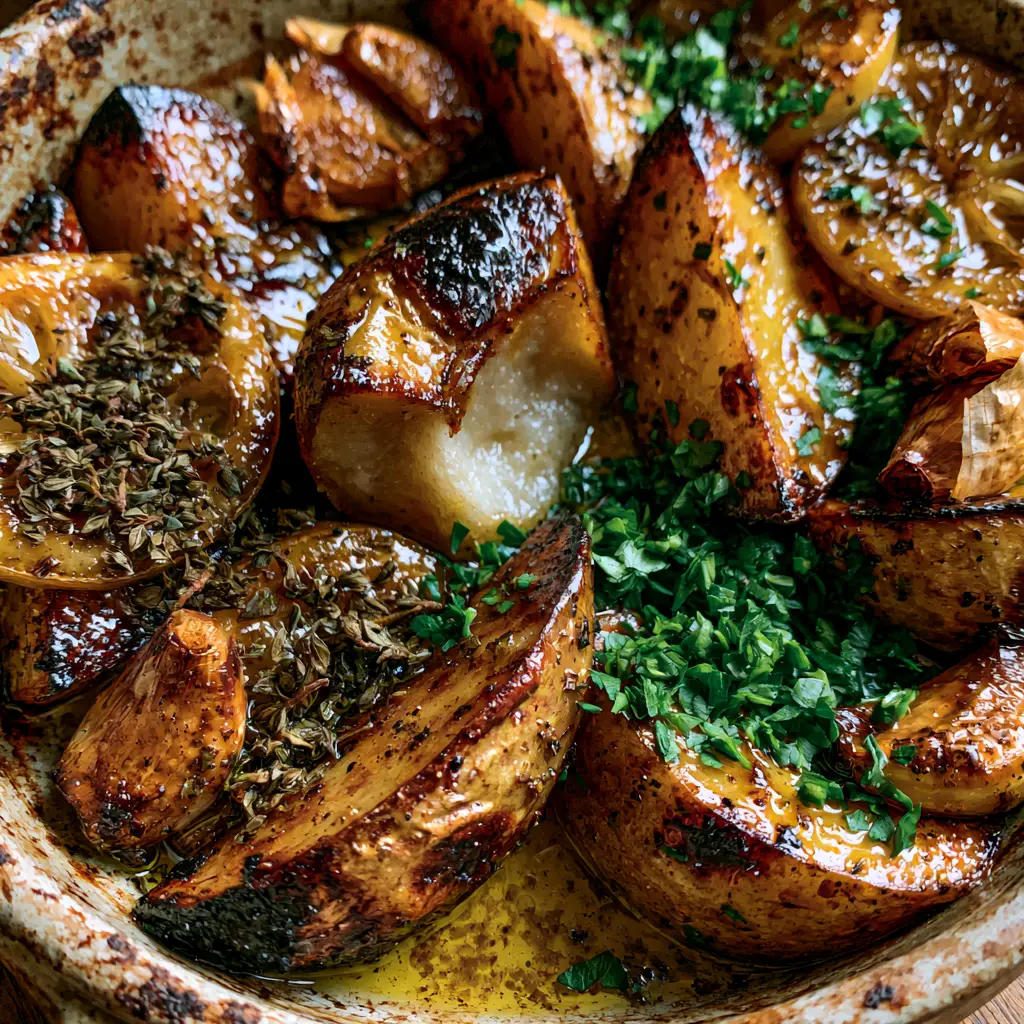
Why These Are The Best Lemon Roasted Greek Potatoes You Will Ever Make
- The Perfect Texture: We utilize a specific two-stage roasting method to ensure the lemon roasted Greek potatoes have a deep golden charred crust while remaining fluffy and buttery inside.
- A Shimmering Emulsion: Unlike dry roasted potatoes, these sit in a glossy lemon-garlic olive oil glaze that coats every single wedge.
- Caramelized Aromatics: Whole garlic cloves are roasted in their skins, becoming sweet and spreadable, providing a mellow contrast to the bright lemon wheels.
- Visual Appeal: With a scattering of bright green fresh parsley and flaky sea salt crystals, this dish is designed to be the centerpiece of your table.
The Anatomy of the Perfect Greek Potato: Ingredients & Substitutions
To achieve the results seen in our lemon roasted Greek potatoes photography, ingredient selection is paramount. Here is what you will need and why each component matters for the final result.
Yukon Gold Potatoes: We use 3 lbs (1.36kg) of Yukon Golds because their natural waxiness allows them to hold their shape while the high starch content creates a creamy, buttery interior when broken open.
Extra Virgin Olive Oil: You will need 1/2 cup (120ml) of high-quality oil. This forms the base of the emulsion and is responsible for the shimmering, glossy finish on the skins.
Fresh Lemons: We use 1/2 cup (120ml) of fresh juice and 2 whole lemons sliced into wheels. The wheels caramelize in the pan, losing their bitterness and becoming a delicious, jammy garnish.
Garlic: One whole head of garlic, cloves separated but left in their papery skins. This protects the garlic from burning while allowing the interior to turn into “garlic butter.”
Dried Greek Oregano: 2 tablespoons (30g) of dried oregano provides that signature earthy, floral aroma that defines lemon roasted Greek potatoes. Dried is actually preferred over fresh here for its concentrated oils.
Chicken or Vegetable Stock: 1 cup (240ml) of stock is the secret “braising” liquid. It allows the potatoes to cook through before the high-heat roasting phase begins.
Fresh Flat-Leaf Parsley: A generous handful of finely chopped parsley added at the very end provides a pop of color and a fresh, herbaceous finish.
Flaky Sea Salt: Use crystals like Maldon for the final seasoning to provide a crunch that highlights the charred edges.
How to Prep Your Potatoes for Maximum Crispness
Choosing the Right Cut
For authentic lemon roasted Greek potatoes, skip the cubes. You want thick, substantial wedges. Cut each Yukon Gold potato in half lengthwise, then cut each half into 3 or 4 long wedges. This thickness is crucial—it ensures the potato doesn’t disintegrate during the long roasting process.
The Importance of Rinsing
Once cut, rinse your wedges in cold water to remove excess surface starch. Pat them bone-dry with a clean kitchen towel. If the potatoes are wet, they will steam instead of blistering, and we want that deep golden-brown char.
Creating the Golden Lemon-Garlic Emulsion
The “secret sauce” of these lemon roasted Greek potatoes is the emulsion. In a medium bowl, whisk together the olive oil, lemon juice, chicken stock, and dried oregano. Whisk vigorously until the oil and stock are no longer separated.
This liquid serves two purposes: it seasons the potato from the inside out as it absorbs, and as the water evaporates in the oven, it leaves behind a concentrated, glossy oil glaze that fries the skins to a blistered perfection.
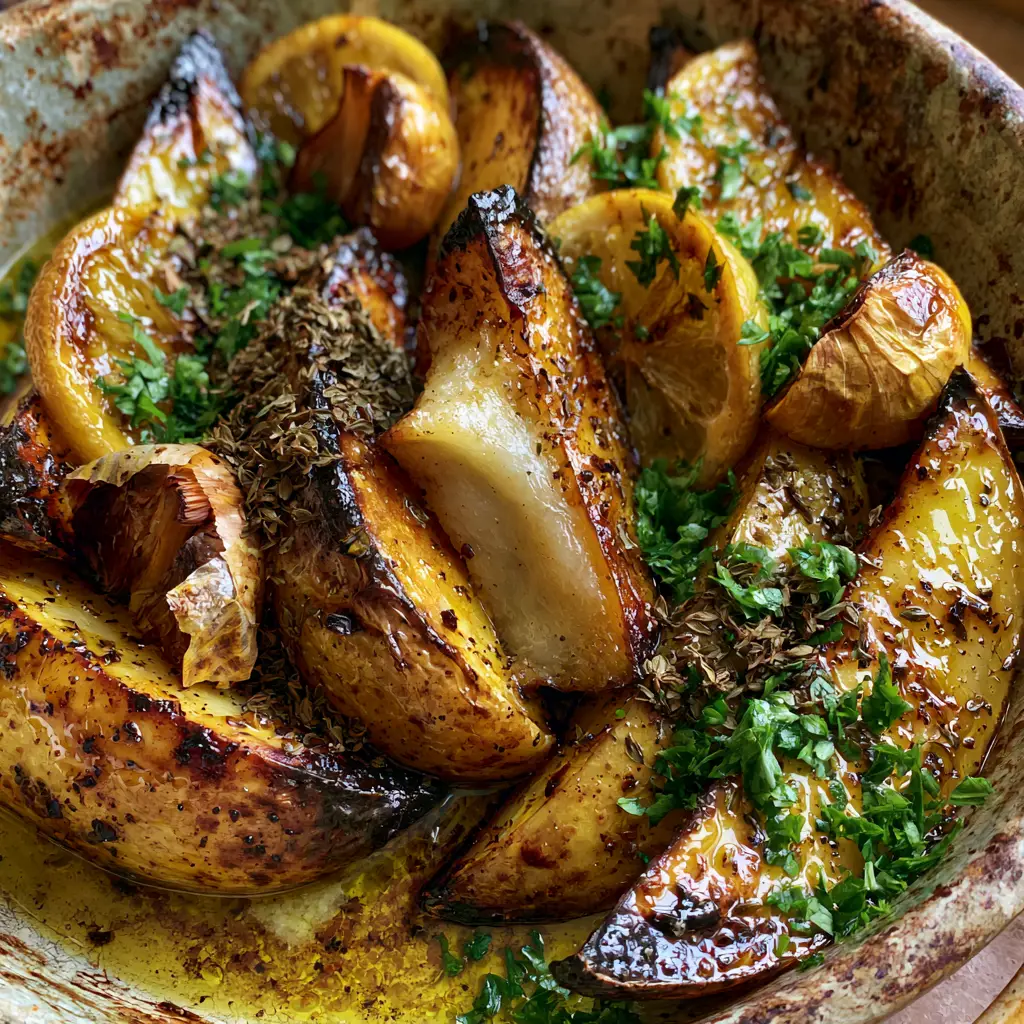
The Step-by-Step Roasting Process
Step 1: The Initial Braise
Preheat your oven to 400°F (200°C). Arrange the potato wedges in a weathered, rustic stoneware baking dish or a heavy-duty sheet pan. Pour the emulsion over the potatoes, ensuring every wedge is submerged or coated. Toss in the whole garlic cloves (skins on) and the lemon wheels.
Step 2: Softening the Interior
Cover the dish tightly with foil. Bake for 25-30 minutes. This creates a steaming environment that results in that “pale, buttery soft interior” we are looking for. The potatoes should be fork-tender but not falling apart.
Step 3: The Blistering Finish
Remove the foil and increase the oven temperature to 450°F (230°C). This is where the magic happens for lemon roasted Greek potatoes. Roast for another 20-25 minutes, turning the potatoes once halfway through.
Visual Cue: You are looking for deep golden-brown charred edges and skins that appear slightly bubbled or blistered. The liquid at the bottom of the pan should be reduced to a thick, shimmering golden sauce.
Expert Tips for Pinterest-Worthy Results
- Don’t Crowd the Pan: If the potatoes are overlapping too much during the final stage, they won’t crisp. Use two pans if necessary to ensure every wedge has room to breathe.
- Leave the Garlic Skins On: The papery skins act as a protective layer, preventing the garlic from turning bitter. Once served, guests can simply squeeze the soft, caramelized garlic out of the skins.
- The High-Heat Blast: Do not be afraid of the 450°F (230°C) temperature. That intense heat is what creates the contrast between the charred exterior and the steaming center.
- Freshness at the End: Always add the fresh parsley and flaky salt after the potatoes come out of the oven to maintain their vibrant color and crunch.
Serving Suggestions and Pairings
These lemon roasted Greek potatoes are incredibly versatile. They pair beautifully with Mediterranean-inspired mains. Try serving them with air fryer crispy white fish for a healthy take on “fish and chips.”
If you are planning a larger feast, these potatoes are a natural companion to homemade doner kebab or a succulent baked huli-huli chicken for a fusion dinner. For a lighter lunch, a simple bowl of these potatoes topped with a dollop of lemon whipped ricotta is absolute heaven.
Storing, Reheating, and Freezing
To Store: Keep leftovers in an airtight container in the refrigerator for up to 4 days. The flavors actually deepen overnight!
To Reheat: Avoid the microwave, as it will make the blistered skins soggy. Instead, place them back in a 400°F (200°C) oven or an air fryer for 5-7 minutes until the edges are crispy again.
To Freeze: While you can freeze these for up to 2 months, the texture of the interior may change slightly upon thawing. Always reheat in the oven directly from frozen.
Frequently Asked Questions
Yes! The roasting process removes the bitterness from the lemon pith, leaving you with a jammy, concentrated citrus flavor that is delicious when eaten with a bite of potato.
While you can, Yukon Golds are preferred because they hold their shape better and have a naturally buttery texture that creates the perfect contrast with the blistered skin.
No! Keeping the papery skins on the garlic cloves protects them from burning at high temperatures, allowing the inside to become sweet, soft, and caramelized.
The gloss comes from the emulsified olive oil and stock. As the water in the stock evaporates, the fats and lemon juice concentrate into a shimmering glaze.
This usually happens if the pan is overcrowded, causing the potatoes to steam rather than roast, or if the oven temperature isn’t high enough. Ensure you use the 450°F (230°C) blast at the end and give the potatoes space.
The Ultimate Lemon Roasted Greek Potatoes Recipe
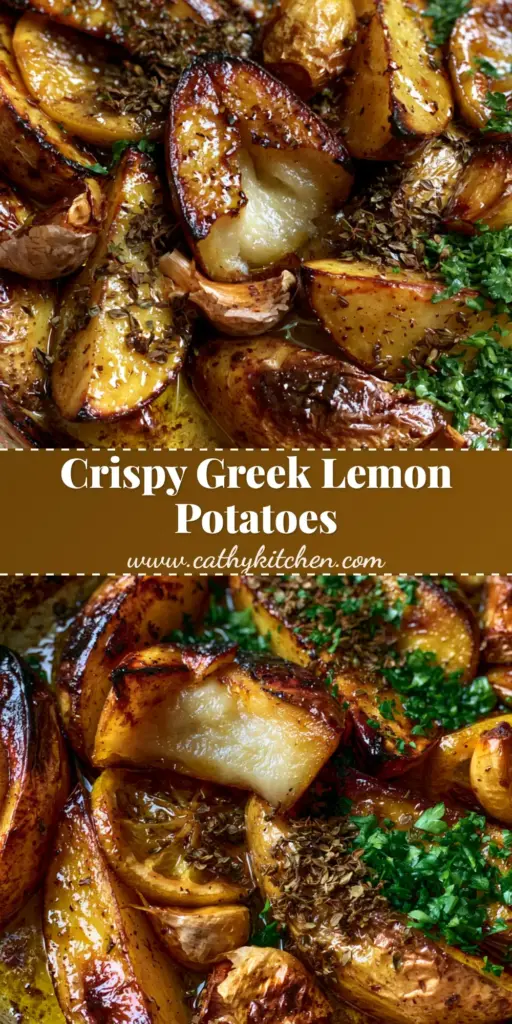
Lemon Roasted Greek Potatoes with Blistered Garlic and Oregano
Ingredients
Equipment
Method
- Preheat your oven to 400°F (200°C). Rinse the potato wedges in cold water and pat them completely dry.
- In a bowl, whisk the olive oil, lemon juice, stock, and dried oregano until a shimmering emulsion forms.
- Place potatoes in a baking dish. Add garlic cloves and lemon wheels. Pour emulsion over the top. Cover with foil and bake for 30 minutes.
- Remove foil and increase heat to 450°F (230°C). Roast for another 20-25 minutes until the edges are deep golden-brown and charred.
- Remove from oven, scatter fresh parsley and flaky sea salt crystals over the potatoes before serving.
Notes
Tip 2. Don't peel the garlic; the skins prevent burning and result in a sweet, caramelized interior.
Join the Kitchen Conversation!
Did your lemon roasted Greek potatoes achieve that perfect golden-brown char? We want to see your results! Save this recipe to your Pinterest boards by clicking the “Pin” button so you never lose it. Follow @cathy_kitchen_official for more Mediterranean-inspired recipes that maximize flavor and visual appeal.
Please leave a 5-star rating in the recipe card above and drop a photo of your dish in the comments below. Happy roasting!