Experience the ultimate refreshing meal with this authentic Vietnamese glass noodle salad, a dish that balances vibrant textures with a complex harmony of sweet, sour, and savory flavors. Often known as Goi Mien, this salad is the epitome of high-end lifestyle dining, featuring shimmering noodles and plump, succulent seafood.
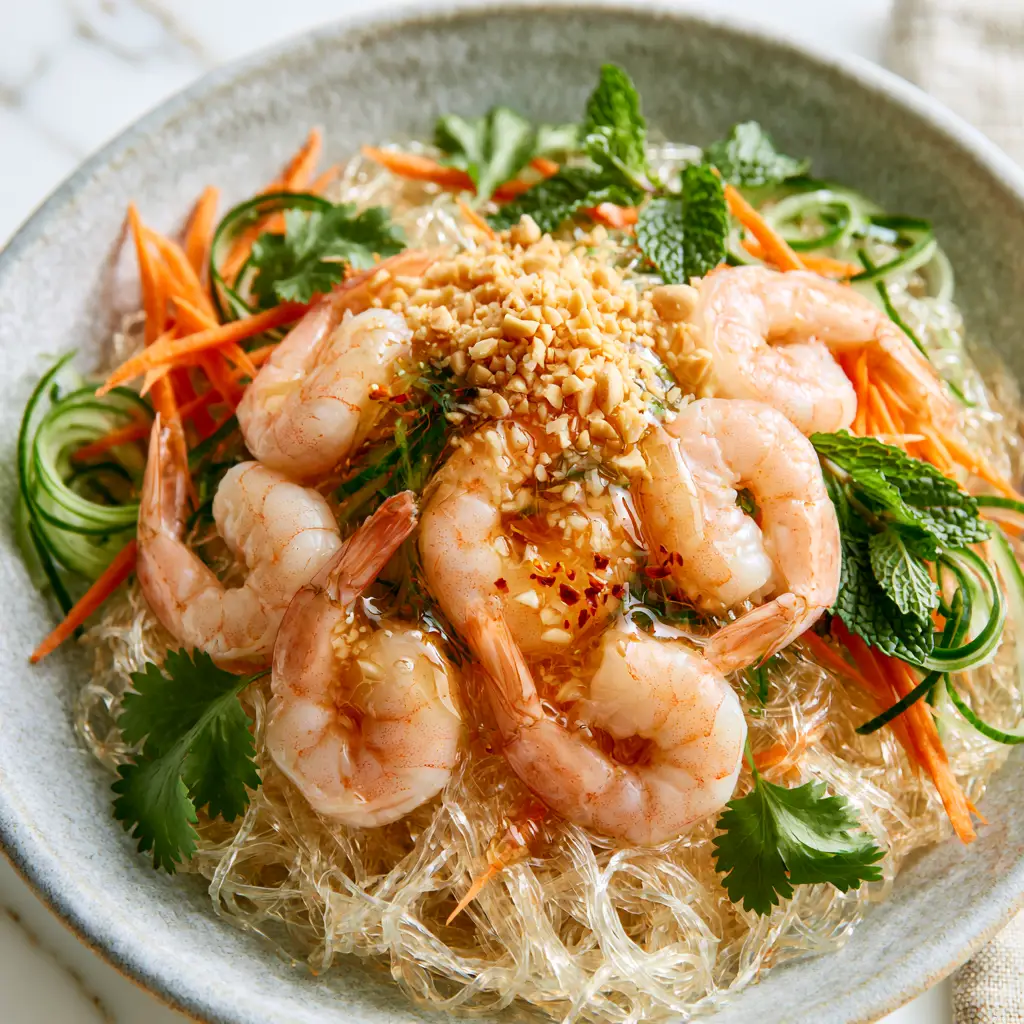
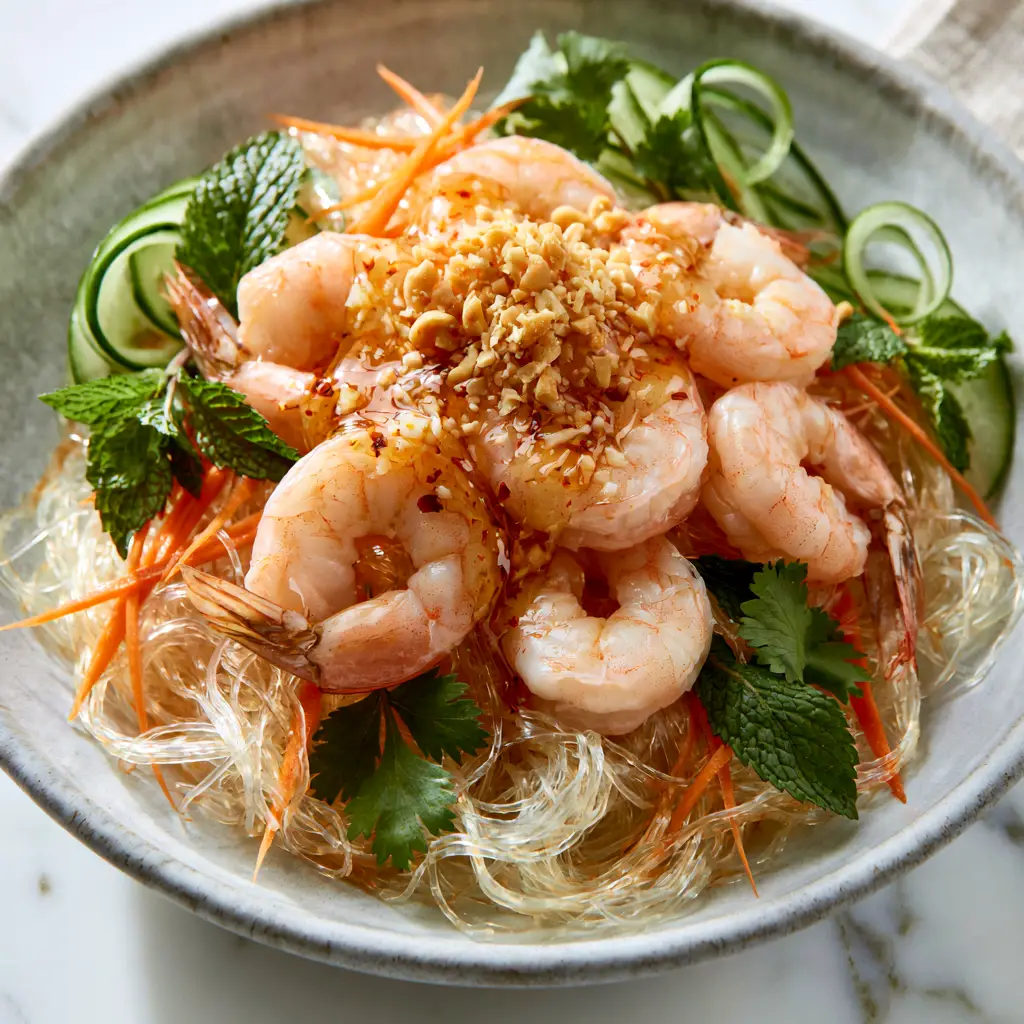
Our version captures the exact visual brilliance of professional food photography, focusing on translucent mung bean glass noodles and vibrant, hand-cut vegetables. Every bite is a journey through Southeast Asian aromatics, anchored by a glossy, garlic-flecked Nuoc Cham dressing that ties the components together.
Whether you are looking for a light lunch or an impressive dinner centerpiece, this Vietnamese glass noodle salad delivers a restaurant-quality experience right to your dining table. Let’s dive into the forensic details of making this visually stunning and culinarily perfect dish.
Why This Vibrant Vietnamese Glass Noodle Salad Is a Texture Lover’s Dream
- Translucent Shimmer: The mung bean glass noodles provide a unique, slippery, and elastic texture that is visually captivating and satisfying to eat.
- Succulent Protein: We use exactly eight large, plump, poached pink shrimp with tail shells intact for a high-end, professional presentation.
- Rainbow of Crunch: Hand-julienned bright orange carrots and paper-thin curls of crisp green cucumber offer a refreshing structural contrast.
- Aromatic Punch: Freshly torn mint leaves and vibrant sprigs of emerald cilantro create an olfactory experience that begins before the first bite.
- The Golden Crunch: A generous scattering of golden crushed roasted peanuts adds a fatty, savory depth that balances the bright acidity of the dressing.
Core Components for the Ultimate Glass Noodle Foundation
Mung Bean Glass Noodles (Cellophane Noodles): 6 oz (170g). These are the star of the show; look for “mung bean” on the label to ensure they turn translucent and maintain a firm “al dente” bite when soaked.
Large Plump Shrimp: 8 pieces (approx. 225g). We keep the tail shells on for that high-end aesthetic, poaching them until they reach a perfect succulent pink hue.
Bright Orange Carrots: 1 large (100g). These must be julienned into matchsticks to provide the specific “tangled” look required for this professional salad build.
Crisp Green Cucumber: 1 medium (200g). Use a mandoline or sharp knife to create paper-thin curls, which hold the glossy dressing better than thick chunks.
Fresh Emerald Herbs: 1/2 cup (15g) mint and 1/2 cup (15g) cilantro. These aren’t just garnishes; they are foundational greens that provide the “vibrant” look described in our visual blueprint.
Roasted Peanuts: 1/4 cup (35g). Ensure they are golden and crushed to provide a varied texture that scatters beautifully across the top of the bowl.
Red Bird’s Eye Chilies: 1-2 small chilies. These provide the thin red slices and tiny flecks within the dressing that offer a visual and sensory “pop.”
The Nuoc Cham Base: A combination of 3 tbsp (45ml) fish sauce, 3 tbsp (45ml) fresh lime juice, 2 tbsp (30g) sugar, and 1/2 cup (120ml) warm water creates the amber-colored glossy finish.
Foundational Aromatics: 2 cloves of garlic, finely minced. These garlic bits must be visible in the dressing to achieve the “glossy clear” look with texture.
Essential Kitchen Tools for Professional Visual Accuracy
To achieve the “handheld smartphone photo vibe” with high-end results, you need a few specific tools. A high-quality julienne peeler or a sharp Mandoline is non-negotiable for those paper-thin cucumber curls and carrot matchsticks.
A heavy-bottomed saucepan is required for poaching the shrimp to ensure even heat distribution, preventing the seafood from becoming rubbery. Finally, a large handcrafted light gray ceramic bowl is the ideal vessel to make the colors of the shrimp and herbs truly pop against a neutral background.
Mastering the Art of the Perfect Glass Noodle Texture
Step 1: Hydrating the Shimmering Mung Bean Noodles
Place your dried mung bean noodles in a heat-proof bowl and cover them with boiling water. Let them soak for exactly 5-7 minutes until they transition from opaque white to a shimmering, translucent state.
Immediately drain the noodles and shock them in an ice bath. This “culinary forensic” step is vital; it stops the cooking process and ensures the noodles remain “tangled” and elastic rather than a mushy clump.
Step 2: Poaching the Succulent Pink Shrimp
Bring a small pot of salted water to a gentle simmer. Add the eight large shrimp (tails on) and poach for 2-3 minutes until they curl slightly and turn a vibrant, opaque pink.
Remove the shrimp and immediately place them on a cold plate. This preserves the “plump and succulent” texture seen in high-end lifestyle photography, preventing overcooking from residual heat.
Step 3: Crafting the Glossy Nuoc Cham Dressing
In a small jar, whisk together the warm water and sugar until fully dissolved. Stir in the fish sauce, fresh lime juice, minced garlic bits, and the thin slices of red chili.
The dressing should be a clear, thin, amber-colored liquid. The visible garlic and chili flakes are what provide the “glossy clear” finish described in the visual recipe blueprint.
Step 4: The Precision Vegetable Prep
Julienne the carrots into 2-inch matchsticks and use a peeler to create long, thin ribbons of cucumber. Tear the mint leaves by hand to avoid bruising the edges, which keeps them looking “emerald” and fresh.
Combine the noodles, carrots, and cucumbers in a large mixing bowl. Drizzle half of the dressing over the mixture and toss gently with tongs to ensure every strand of noodle is shimmering and coated.
Step 5: Architectural Plating and Garnishing
Transfer the noodle base into your handcrafted light gray ceramic bowl. Artfully layer the eight pink shrimp on top, ensuring the tails are visible for a professional look.
Top with the vibrant cilantro sprigs and torn mint. Finally, scatter the golden crushed peanuts and remaining chili slices over the dish, drizzling the last of the Nuoc Cham for that final glossy highlight.
Pro Secrets for a More Vibrant and Professional Result
- The Cooling Factor: Ensure your noodles are completely cold before adding the herbs. Residual heat will wilt the cilantro and mint, ruining the “vibrant emerald” aesthetic.
- Dressing Emulsion: If your dressing looks dull, add a teaspoon of neutral oil. This creates a more “glossy” finish that catches the light in food photography.
- The Shrimp Tail Trick: Leaving the tail shells on provides a structural handle and a “high-end” feel. It also keeps the shrimp looking larger and more “plump.”
- Herb Freshness: Only add the herbs seconds before serving. This ensures they look “fresh and emerald” rather than dark and limp.
Planning Ahead: Storage and Freshness Tips
This Vietnamese glass noodle salad is best enjoyed immediately to appreciate the “crisp” and “succulent” textures. However, if you have leftovers, they can be stored in an airtight container for up to 24 hours.
Keep the dressing and the crushed peanuts in separate containers. Re-dressing the salad just before eating will prevent the noodles from absorbing all the liquid and becoming soggy. Note that this dish does not freeze well due to the high water content of the cucumbers and the delicate nature of the mung bean noodles.
Best Pairings for a Full Southeast Asian Feast
To turn this salad into a full spread, consider starting with a light appetizer. Much like a vermicelli noodle salad, this dish pairs beautifully with crispy spring rolls or a refreshing hawaiian coleslaw for extra crunch.
If you are hosting a summer dinner, serve this alongside a chilled pineapple rum punch or a classic rum punch. The sweetness of the rum balances the spicy “pop” of the red chilies in the Nuoc Cham dressing perfectly.
Your Vietnamese Glass Noodle Salad Questions Answered
Yes, traditional mung bean glass noodles are naturally gluten-free, making this Vietnamese glass noodle salad an excellent choice for those with gluten sensitivities.
Absolutely! Replace the fish sauce with a vegan ‘no-fish’ sauce or light soy sauce, and swap the shrimp for crispy fried tofu or steamed mushrooms.
You can prep the vegetables and dressing 24 hours ahead, but combine the noodles and herbs just before serving to maintain the best texture and color.
The secret is to shock them in an ice bath immediately after soaking, then toss them with a little bit of the dressing or a teaspoon of sesame oil.
Glass noodles (cellophane noodles) are made from mung bean starch and become translucent when cooked. Rice noodles are made from rice flour and remain opaque white.
The Ultimate Vietnamese Glass Noodle Salad Recipe Card
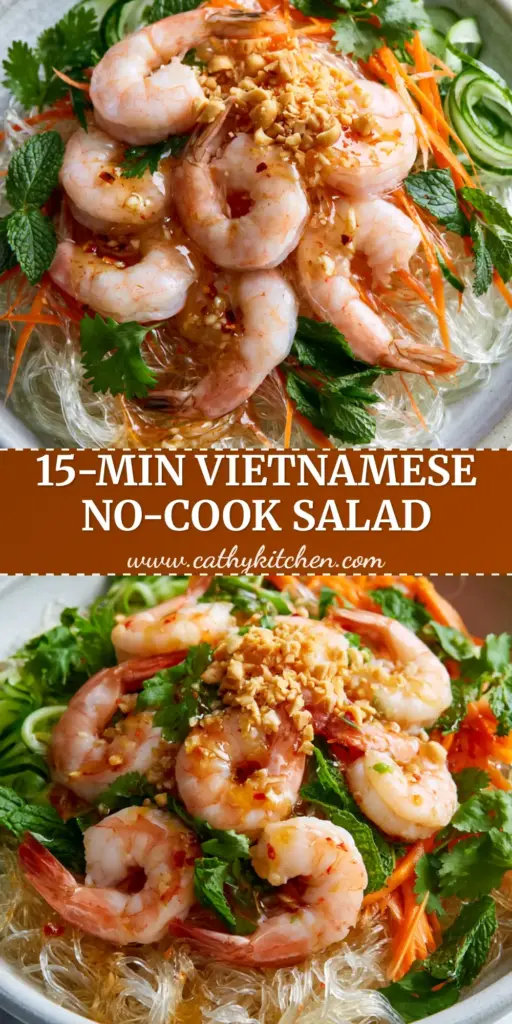
Vietnamese Glass Noodle Salad with Succulent Poached Shrimp
Ingredients
Equipment
Method
- Soak mung bean noodles in boiling water for 5-7 minutes until translucent. Drain and shock in an ice bath.
- Simmer shrimp in salted water for 2-3 minutes until pink and succulent. Transfer to a cold plate.
- Whisk warm water, sugar, fish sauce, lime juice, garlic, and chili until sugar is dissolved.
- Toss noodles, carrots, and cucumber curls with half the dressing. Place in a gray ceramic bowl.
- Top with 8 shrimp, mint, cilantro, and crushed peanuts. Drizzle with remaining dressing.
Notes
Keep shrimp tails on for a professional photography aesthetic.
Join Our Community of Home Chefs
We hope this Vietnamese glass noodle salad brings a burst of freshness and professional flair to your kitchen! The combination of translucent noodles and succulent shrimp is a guaranteed crowd-pleaser that looks just as good as it tastes.
If you made this recipe, please leave a comment below and tell us how your plating turned out! Don’t forget to sign up for our newsletter for more “Visual Recipe Blueprints” and follow us on Pinterest to save this recipe for your next dinner party.