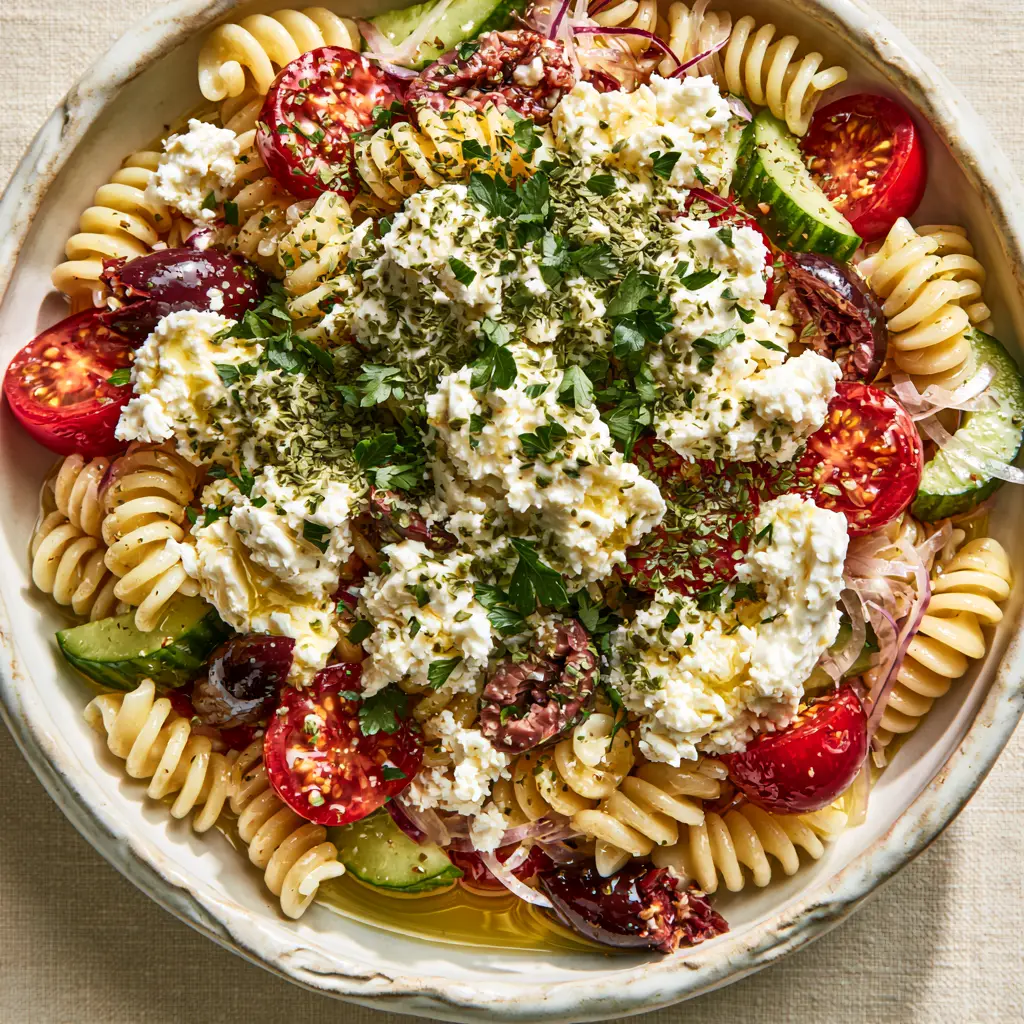
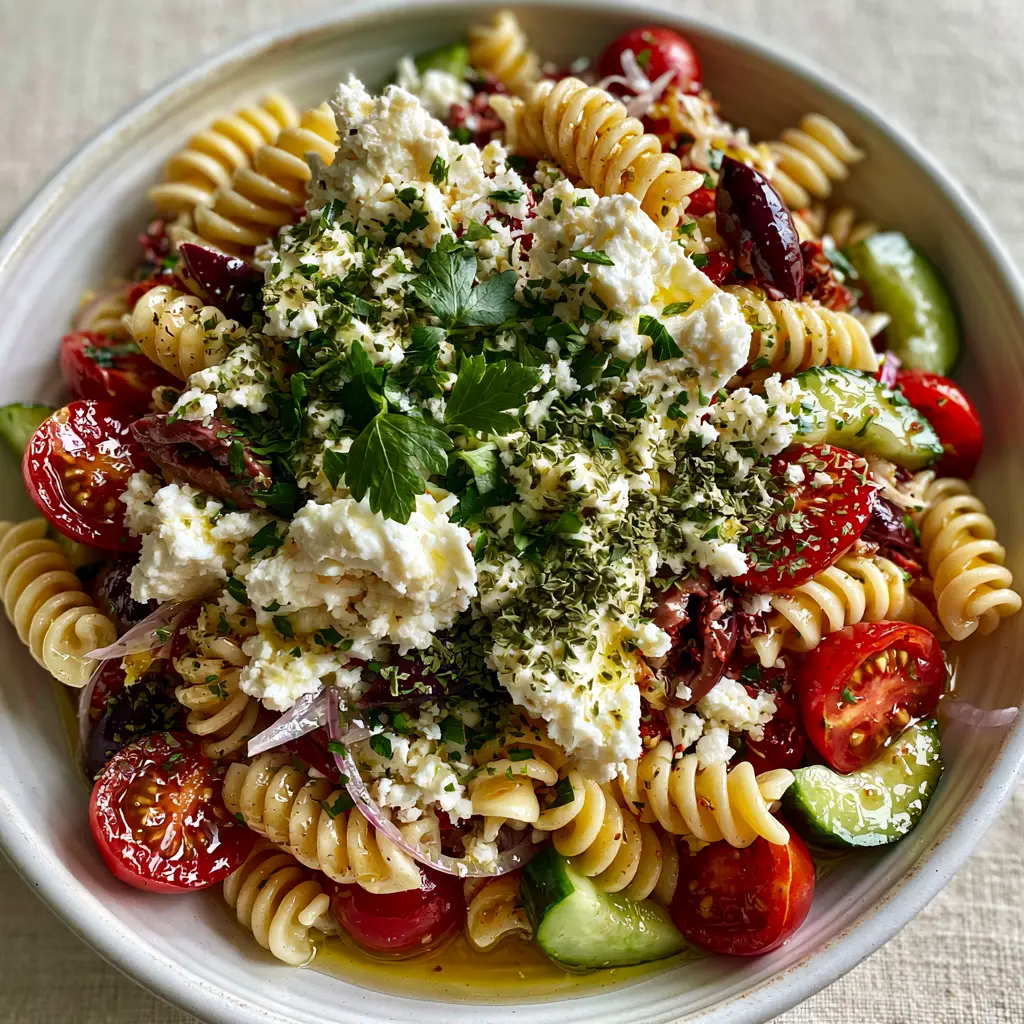
There is something undeniably magnetic about a vibrant, freshly tossed Greek salad pasta that captures the essence of Mediterranean summer. Imagine a handcrafted ceramic bowl, overflowing with spiraled rotini, translucent red onions, and ruby-red cherry tomatoes, all bathed in soft, natural daylight. This isn’t just a side dish; it is a visual and sensory masterpiece designed for those who appreciate the “messy-chic” aesthetic of a handheld smartphone photo taken in the heat of the moment.
The beauty of this Greek salad variation lies in the interplay of textures—the snap of crescent-cut English cucumbers against the creamy, moist crumbles of high-quality feta cheese. Every forkful offers a balance of briny kalamata olives and a glistening lemon-herb vinaigrette that pools slightly at the bottom of the bowl, just waiting to be soaked up by the al dente pasta. Whether you are hosting a sun-drenched backyard gathering or prepping a weeknight meal, this recipe delivers professional-grade results with an approachable, rustic charm.
In this deep dive, we are exploring the culinary science behind the perfect pasta salad, from the emulsification of the dressing to the proper way to shave an onion for that translucent finish. We will ensure your Greek salad looks exactly like the vibrant, handheld photo that inspired this recipe, maintaining structural integrity and explosive flavor in every bite.
Why You’ll Crave This Zesty Mediterranean Masterpiece
- Textural Harmony: We pair al dente rotini spirals with crisp English cucumbers and soft, large crumbles of feta for a multi-dimensional mouthfeel.
- Visual Vibrancy: The combination of ruby-red tomatoes and bright green parsley creates a high-contrast aesthetic that looks as good as it tastes.
- Glistening Finish: Our specific oil-to-lemon ratio ensures the salad shines under natural light without becoming greasy or heavy.
- Briny Depth: The inclusion of pitted kalamata olives provides a salty, fermented punch that cuts through the creamy cheese.
- Professional Aromatics: A double-herb approach using both fresh flat-leaf parsley and dried green oregano provides layers of scent and flavor.
The Anatomy of a Perfect Greek salad Pasta
To achieve the visual and culinary success seen in our blueprint, every ingredient must serve a specific purpose. We aren’t just tossing things in a bowl; we are building a flavor profile that is balanced, acidic, and deeply satisfying.
The Pasta Foundation
1 lb (454g) Rotini Pasta: The spiral shape of rotini is essential because the ridges act as “sauce-catchers,” trapping the lemon-herb vinaigrette and bits of dried oregano in every twist. It provides the structural backbone of the Greek salad, offering a satisfying chew that stands up to the heavy vegetable components.
The Fresh Produce Spectrum
2 cups (300g) Cherry Tomatoes: Halving these “ruby-red” gems releases just enough juice to mingle with the dressing while keeping their structural integrity. Their sweetness is the perfect foil to the salty olives.
1 large (300g) English Cucumber: Unlike standard cucumbers, the English variety has thinner skin and smaller seeds. We use a crescent-cut (halved lengthwise and then sliced) to create a “crisp” texture that mimics the curve of the pasta.
1/2 small (70g) Red Onion: Shaving these paper-thin is the secret to the “translucent” look. It also ensures the onion flavor is a delicate whisper rather than a pungent shout.
The Briny and Creamy Accents
1 cup (150g) Pitted Kalamata Olives: These provide the “briny” soul of the dish. Their dark purple hue offers a sophisticated color contrast against the white feta and green herbs.
6 oz (170g) Feta Cheese: Avoid the pre-crumbled tubs, which are often coated in anti-caking agents. Buy a block in brine and break it into “large, moist crumbles” by hand to achieve that creamy, decadent finish seen in the blueprint.
1/4 cup (15g) Fresh Flat-Leaf Parsley & 1 tsp (2g) Dried Oregano: The parsley adds a fresh, peppery finish, while the dried oregano provides the earthy, floral note characteristic of a traditional Greek salad.
The Glistening Lemon-Herb Vinaigrette
1/2 cup (120ml) Extra Virgin Olive Oil: Use a high-quality oil with a peppery finish to create the “glistening” surface on the vegetables and pasta.
1/4 cup (60ml) Fresh Lemon Juice: The acidity brightens the entire dish and helps break down the fibers of the shaved onions, making them more palatable.
1 tsp (5g) Dijon Mustard & 1 clove Garlic: These are our “invisible” ingredients. The mustard acts as a natural emulsifier to keep the dressing from separating, while the garlic adds a foundational savory depth.
Essential Tools for the Professional Home Cook
To replicate the “handheld smartphone photo” look, you need tools that allow for precision cutting and proper emulsification. A sharp chef’s knife or a mandoline is non-negotiable for achieving those translucent red onion slices. A large handcrafted ceramic bowl is ideal for the “messy-chic” presentation, allowing the vinaigrette to pool slightly at the bottom.
You will also need a large pot for boiling the pasta and a high-quality whisk to ensure your vinaigrette is fully integrated. For the best “glistening” effect, use a glass jar to shake the dressing vigorously before pouring it over the salad, ensuring every spiral of rotini is coated.
Step-by-Step Guide to the Ultimate Greek salad Pasta
1. Achieving the Perfect Al Dente Rotini
Bring a large pot of heavily salted water to a rolling boil. Add the rotini and cook for approximately 8-10 minutes. Begin tasting the pasta 2 minutes before the package directions suggest; you want a firm “al dente” bite that can withstand being tossed with liquid without becoming mushy. Drain the pasta and immediately rinse with cold water to stop the cooking process and remove excess starch, ensuring the spirals remain distinct and vibrant.
2. Crafting the Glistening Vinaigrette
In a small bowl or mason jar, combine the extra virgin olive oil, fresh lemon juice, minced garlic, Dijon mustard, and a pinch of salt and black pepper. Whisk or shake vigorously until the mixture is opaque and slightly thickened. This emulsification is what creates the “light, translucent golden” appearance that clings to the ingredients rather than sliding off to the bottom immediately.
3. The Art of the Vegetable Prep
While the pasta cools, focus on the visual details. Halve the cherry tomatoes to reveal their juicy interiors. Slice the English cucumber into thin crescents for a crisp snap. Use a mandoline or a very sharp knife to shave the red onion into paper-thin, translucent ribbons. Place these in a large mixing bowl with the pitted kalamata olives. The variety of shapes—spirals, circles, crescents, and ribbons—is what gives the Greek salad its “freshly tossed” appeal.
4. The Messy-Chic Assembly
Add the cooled rotini to the bowl of vegetables. Pour the lemon-herb vinaigrette over the top and toss gently with large spoons. You want every surface to be glistening. Once combined, fold in the large crumbles of feta cheese and the chopped parsley. Finish with a generous dusting of dried oregano flakes. Transfer the salad to your handcrafted ceramic bowl, allowing some of the heavier ingredients to fall naturally to the sides, creating that abundant, abundant look.
Expert Tips for Visual and Flavor Success
- Temperature Control: Never toss the dressing with hot pasta. The heat will cause the vegetables to wilt and the oil to soak into the pasta, losing that “glistening” surface quality.
- The Feta Factor: Always crumble the feta last. If you toss it too much, the cheese will break down and turn the dressing cloudy, ruining the “translucent” look of the vinaigrette.
- Onion Mellowing: If you find raw red onions too sharp, soak the shaved slices in cold water for 10 minutes before adding them to the salad. This keeps them “translucent” but removes the harsh bite.
- Salt Timing: Don’t salt the vegetables until you are ready to serve. Salt draws out moisture, which can lead to a watery salad rather than a glistening one.
Storage, Refreshing, and Meal Prep Advice
This Greek salad pasta is excellent for meal prep as the flavors actually meld and improve over time. Store the salad in an airtight container in the refrigerator for up to 4 days. Because the pasta will eventually absorb some of the vinaigrette, you may lose that “glistening” appearance by day two.
To refresh the salad, simply add a small squeeze of fresh lemon juice and a teaspoon of olive oil before serving. Do not freeze this dish; the cucumbers and tomatoes will lose their structural integrity and become mushy upon thawing.
Creative Serving Suggestions and Pairings
While this pasta salad is a meal in itself, it thrives when paired with other Mediterranean-inspired dishes. For a light lunch, serve it alongside a traditional Horiatiki to double down on those fresh Greek flavors. If you are looking for a more substantial dinner, it acts as a refreshing counterpoint to rich, buttery lobster rolls.
For a summer barbecue, consider serving this alongside charred grilled elote for a fusion of textures. If you enjoy the flavor profile but want something warm, our Mediterranean chicken orzo pasta offers a similar herb-forward experience in a comforting, hot format.
Frequently Asked Questions
Yes, you can prepare it up to 24 hours in advance. However, wait to add the feta and fresh parsley until just before serving to maintain the best color and texture.
Use a mandoline or a very sharp chef’s knife to shave the onion as thinly as possible. Soaking the slices in ice water for 10 minutes also helps them crisp up and look clear.
Rinse the cooked pasta in cold water to remove surface starch and cool it completely. This creates a barrier that helps the dressing ‘glisten’ on the surface rather than being absorbed.
English cucumbers are preferred because they have thinner skins and fewer seeds, providing a better ‘snap’ without the watery texture of standard cucumbers.
Always choose a block of feta sold in brine. This ensures the cheese remains moist and allows you to create those large, creamy crumbles seen in professional photography.
The Ultimate Greek salad Pasta Recipe Card
Greek salad Pasta with Lemon-Herb Vinaigrette and Creamy Feta
Ingredients
Equipment
Method
- Cook the rotini in salted water until al dente. Drain and rinse with cold water immediately to keep spirals distinct.
- Combine olive oil, lemon juice, Dijon, garlic, salt, and pepper in a jar. Shake until glistening and golden.
- Halve tomatoes, crescent-cut cucumbers, and shave the red onion into translucent ribbons.
- Combine pasta and vegetables with the dressing. Gently fold in large feta crumbles, parsley, and oregano.
Notes
Rinse the pasta in cold water to prevent it from absorbing too much dressing initially.
Closing & Call to Action
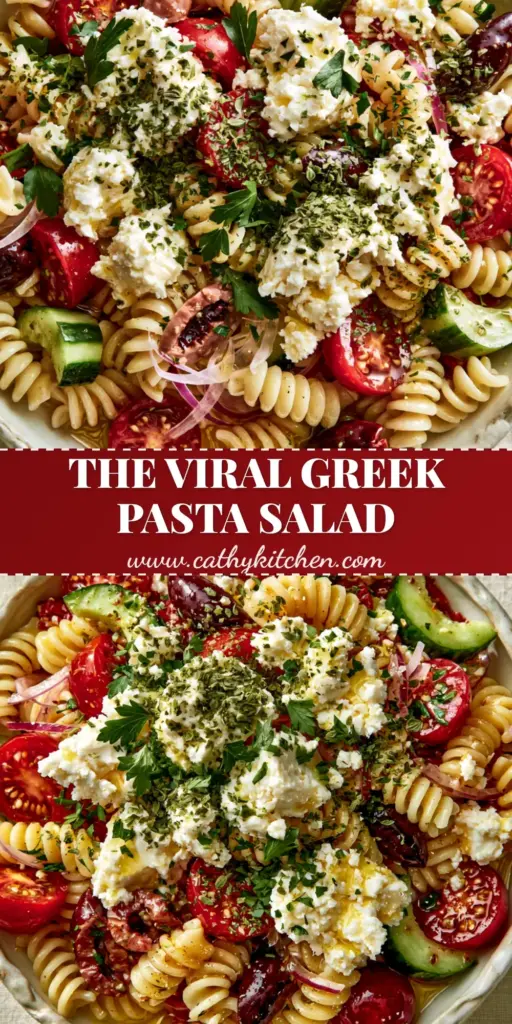
This Greek salad pasta brings the vibrant energy of the Mediterranean straight to your table. With its glistening lemon-herb dressing and creamy feta, it is the perfect dish for those who eat with their eyes first. The “messy-chic” presentation and “ruby-red” visuals make it a guaranteed hit for both your palate and your social feed.
If you enjoyed this recipe, please leave a comment below and let us know how yours turned out! Don’t forget to save this to your favorite boards on Pinterest so you can find it whenever the craving for a fresh, zesty salad hits. Happy cooking!