Lemon Custard Cake is the quintessential “magic” dessert that defies culinary logic. Imagine a single batter that, while baking, transforms into three distinct, heavenly layers: a dense buttery crust base, a creamy lemon custard middle, and a fluffy golden sponge layer on top. It is a visual and textural masterpiece that captures the bright, sun-drenched flavors of fresh citrus in every bite.
This recipe is designed for the home cook who wants high-impact results with simple pantry staples. Whether you are hosting a spring brunch or looking for a refreshing conclusion to a heavy meal, this Lemon Custard Cake delivers a professional-grade profile that looks stunning on a white ceramic dessert plate. Before we dive into the science of how these layers separate, consider pairing this bright dessert with a zesty lemon whipped ricotta for an extra layer of decadence.
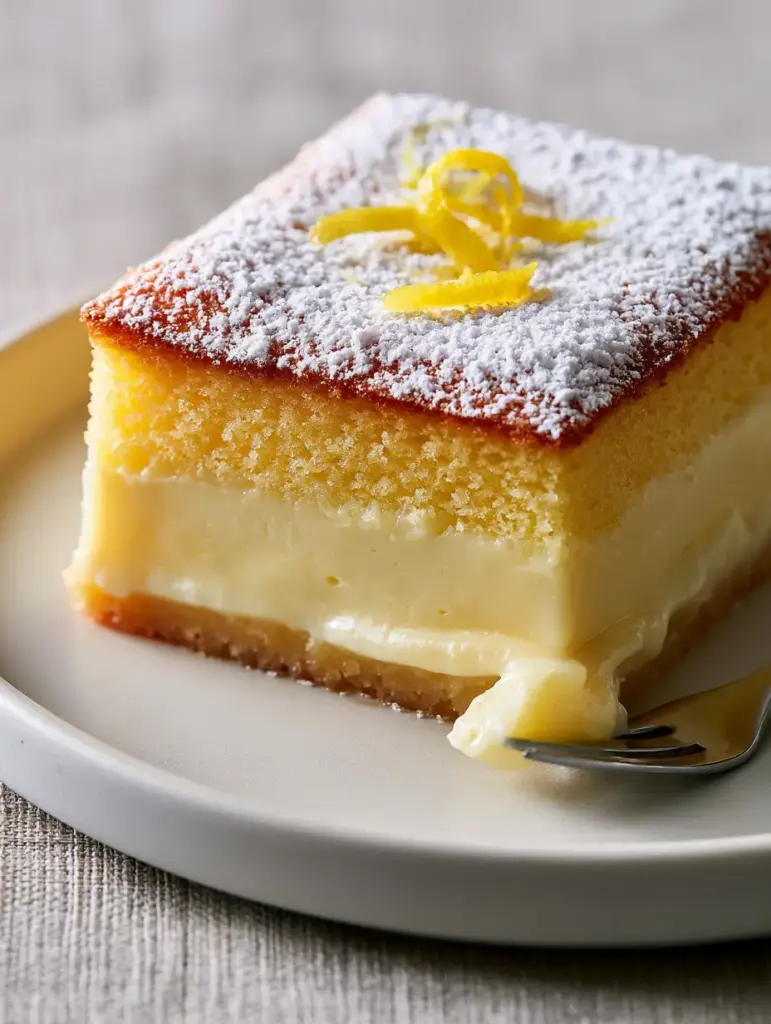
Why This Lemon Custard Cake Is a Total Game Changer
- Triple-Layer Texture: You get a soft sponge, gooey custard, and a firm crust all from one pour.
- Intense Citrus Profile: Using both fresh juice and micro-planed lemon zest curls ensures a vibrant, natural flavor.
- Pinterest-Perfect Presentation: A simple dusting of sifted powdered sugar makes this look like it came from a high-end patisserie.
- Make-Ahead Friendly: The custard layer sets perfectly as it cools, making it the ideal dessert for entertaining.
Essential Ingredients for the Perfect Citrus Custard
The secret to the Lemon Custard Cake lies in the temperature and quality of your ingredients. Each component plays a specific role in the “magic” separation process.
Large Eggs (4, separated): The yolks provide the richness for the custard, while the whipped whites create the fluffy golden sponge layer. Ensure they are at room temperature.
Granulated Sugar (3/4 cup / 150g): This sweetens the batter and helps stabilize the egg whites during the whipping process.
Unsalted Butter (1/2 cup / 113g, melted and cooled): This creates that signature dense buttery crust base. If the butter is too hot, it will cook the eggs prematurely.
All-Purpose Flour (3/4 cup / 95g): A small amount of flour is needed to hold the structure of the sponge and the base.
Whole Milk (2 cups / 480ml, lukewarm): The milk must be lukewarm to ensure the fat in the butter doesn’t seize up, allowing the layers to separate cleanly.
Fresh Lemon Juice (1/4 cup / 60ml) & Zest: Use fresh lemons only. The acidity reacts with the batter to provide a light lift and that iconic tang.
Vanilla Extract (1 tsp): A background note that rounds out the sharp citrus notes.
The Science of the Three Layers
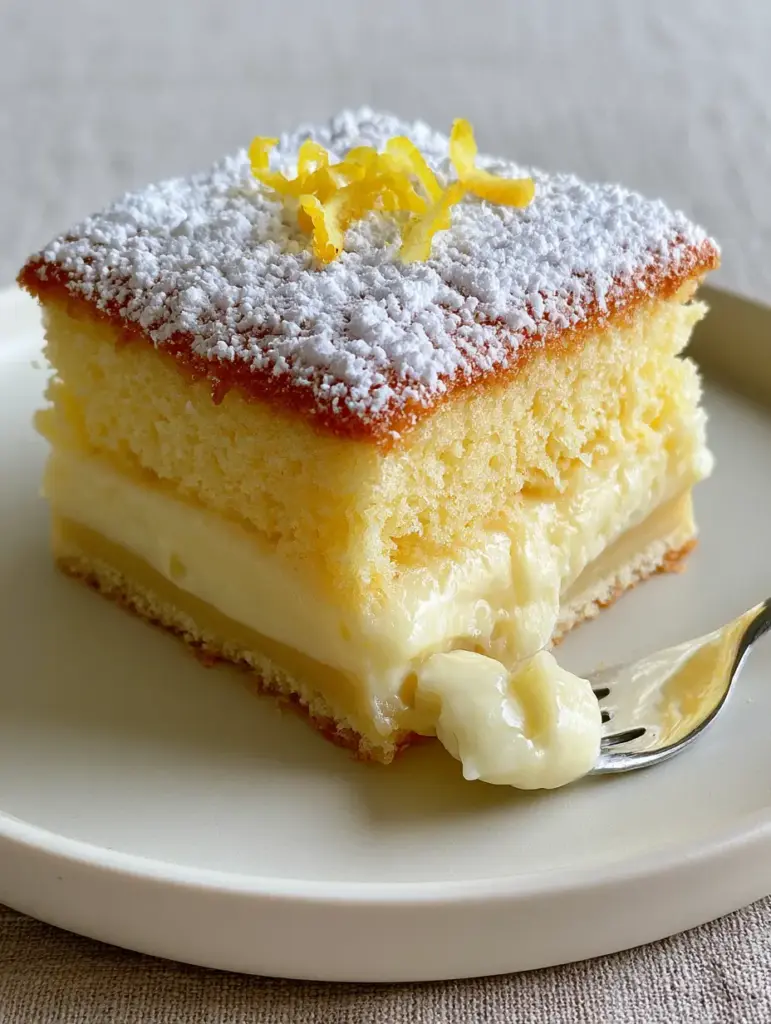
You might be wondering how one batter creates three layers. It is all about density and heat. The heavy flour and butter mixture sinks to the bottom to form the crust.
The middle layer stays liquid-heavy, cooking slowly into a creamy lemon custard. Meanwhile, the aerated egg whites float to the top, baking quickly into a delicate sponge.
If you love the combination of lemon and savory notes, try serving this cake after a meal featuring lemon parmesan salad for a thematic citrus experience.
Step-By-Step Instructions for Lemon Custard Cake
1. Preparing the Foundation
Preheat your oven to 325°F (160°C). This low temperature is vital; if the oven is too hot, the cake will set before the layers have a chance to separate. Grease an 8×8 inch (20x20cm) baking dish thoroughly.
2. Whipping the Egg Whites
In a clean glass bowl, beat the 4 egg whites until stiff peaks form. You want them to be firm but not dry. Set these aside; they are the “air” that will become your fluffy golden sponge layer.
3. Mixing the Liquid Gold
In a separate large bowl, beat the 4 egg yolks with the sugar until the mixture is pale and thick. Slowly drizzle in the melted, cooled butter and the vanilla. Whisk in the flour until just combined.
4. The Tempering Process
Slowly add the 2 cups (480ml) of lukewarm milk and the lemon juice. The batter will look very thin—almost like a soup. Do not panic! This high liquid content is what creates the creamy lemon custard middle.
5. The Gentle Fold
Gently fold the egg whites into the liquid batter using a spatula. Do not over-mix. You want visible “clouds” of egg whites floating on top. These clouds are what form the sponge top.
6. Baking for the Magic Moment
Pour the batter into the prepared dish and bake for 45–55 minutes. The cake is done when the top is a beautiful golden-yellow and the center has a slight, jelly-like jiggle when shaken.
Expert Tips for Foolproof Separation
Check Your Milk Temp: If your milk is cold, the melted butter will clump, and you won’t get a smooth creamy lemon custard middle. Aim for exactly 100°F (38°C).
Be Gentle with Whites: Over-folding the egg whites will destroy the air bubbles, resulting in a flat cake without the distinct sponge layer.
The Cooling Rule: You must let the cake cool completely in the pan for at least 2 hours before slicing. This allows the custard to set. For the best experience, refrigerate it for 4 hours.
The Garnish: Just before serving, use a fine-mesh sieve to add sifted powdered sugar and top with fresh micro-planed lemon zest curls for a pop of color.
How to Store and Serve Your Cake
This Lemon Custard Cake is best served chilled or at room temperature. Because of the high egg and milk content, it must be stored in the refrigerator.
Cover the baking dish with plastic wrap or transfer slices to an airtight container. It will stay fresh and delicious for up to 4 days. We do not recommend freezing this cake, as the delicate custard texture can become grainy upon thawing.
If you are planning a full meal, this cake pairs wonderfully after a main course of lemon roasted greek potatoes and roasted chicken.
What to Serve With Lemon Custard Cake
While this cake is a star on its own, you can elevate the plate by adding a dollop of unsweetened whipped cream or a handful of fresh raspberries. The tartness of the berries cuts through the richness of the dense buttery crust base.
For those who enjoy a variety of treats, a small piece of caramel apple bark on the side provides a lovely textural contrast to the soft custard.
Frequently Asked Questions
Yes, you can substitute the all-purpose flour with a high-quality 1:1 gluten-free flour blend. The density of the flour is what creates the bottom layer, so a starch-heavy blend works best.
For the best flavor and proper chemical reaction, fresh lemon juice is highly recommended. Bottled juice often has preservatives that can affect the delicate custard set.
The cake should have a slight jiggle in the center when shaken, but shouldn’t be sloshing. The 4-hour refrigeration period is crucial for the custard to fully firm up.
Make sure you used an 8×8 inch pan. If the pan is too large, the batter spreads too thin, and the layers won’t have enough vertical space to distinguish themselves.
The most common reasons are over-mixing the egg whites (which destroys the sponge layer) or using cold milk (which prevents the flour and butter from sinking to form the crust).
The Best Lemon Custard Cake Recipe
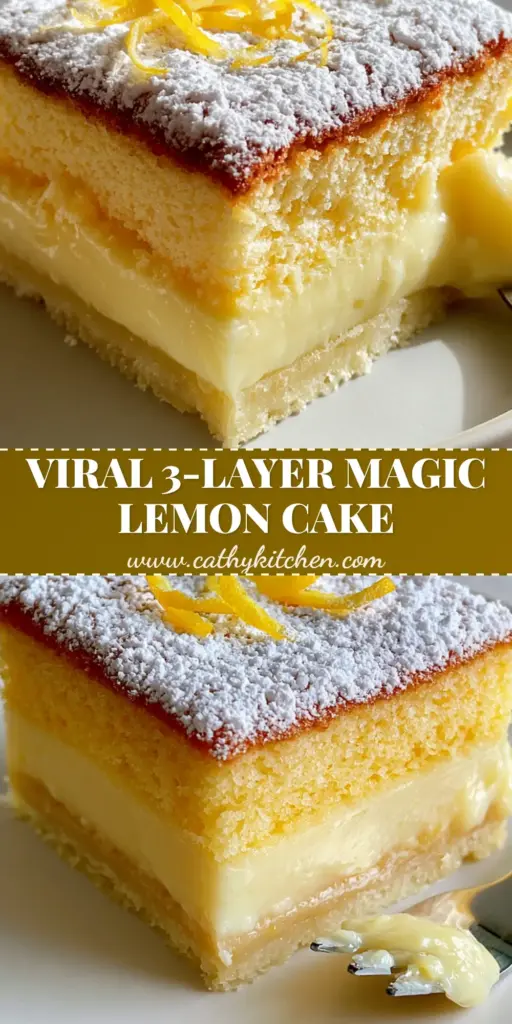
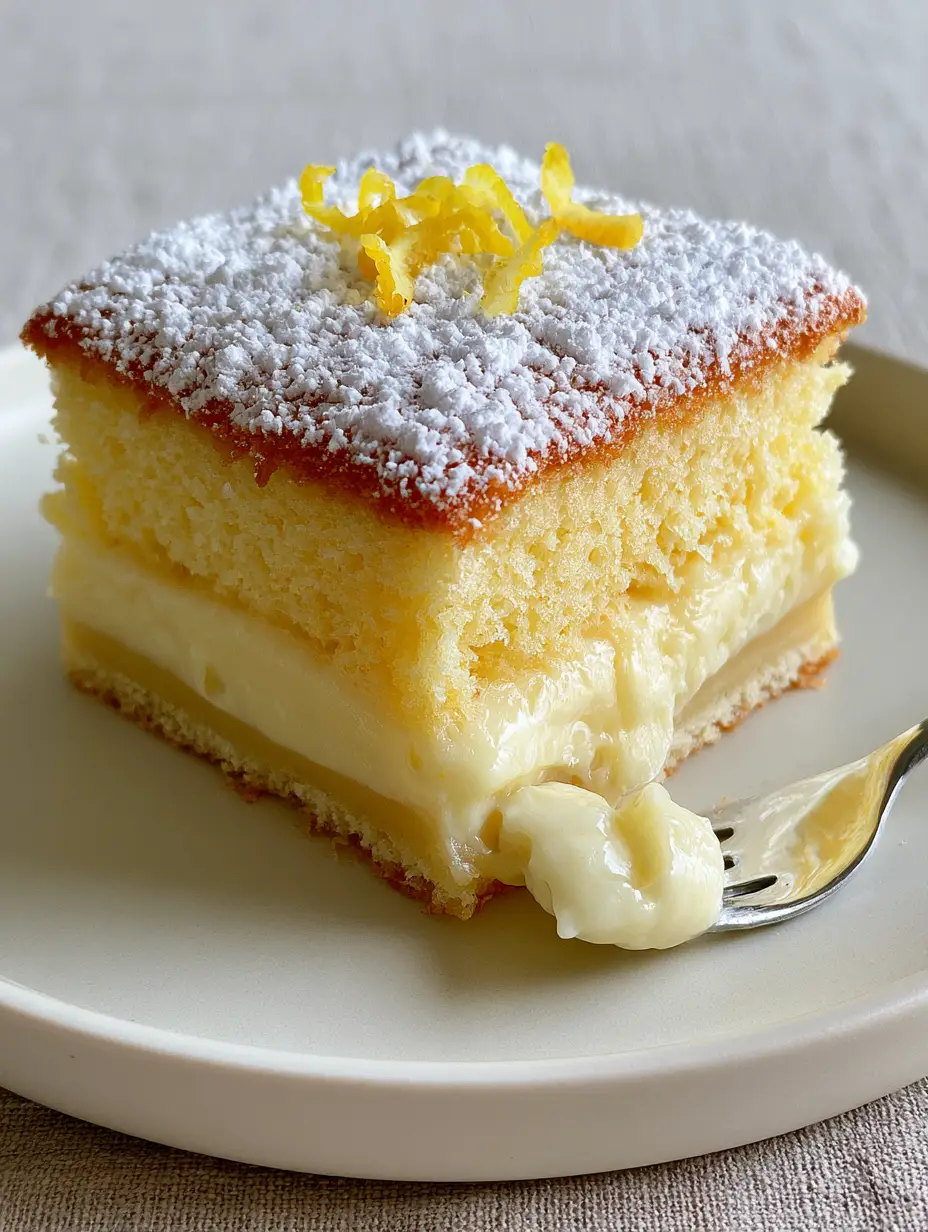
Lemon Custard Cake: The Ultimate Triple-Layer Magic Dessert
Ingredients
Equipment
Method
- Preheat oven to 325°F (160°C) and grease an 8x8 inch pan.
- Beat egg whites until stiff peaks form; set aside.
- Beat yolks and sugar until pale, then whisk in butter, vanilla, and flour.
- Slowly add lukewarm milk and lemon juice/zest until combined.
- Gently fold in egg whites, leaving some streaks for the sponge layer.
- Bake for 45-55 minutes until the top is golden and center jiggles slightly.
- Cool completely in pan for 2 hours, then refrigerate for 4 hours to set the custard.
Notes
Do not over-mix the egg whites or you will lose the sponge layer.
Share the Magic!
Did your Lemon Custard Cake create three perfect layers? We want to see your results! Save this recipe to your Pinterest “Dessert Goals” board so you never lose it.
Follow @cathy_kitchen_official for more foolproof baking secrets. If you made this, please leave a 5-star rating in the recipe card above and upload a photo of your slice in the comments below. Happy baking!