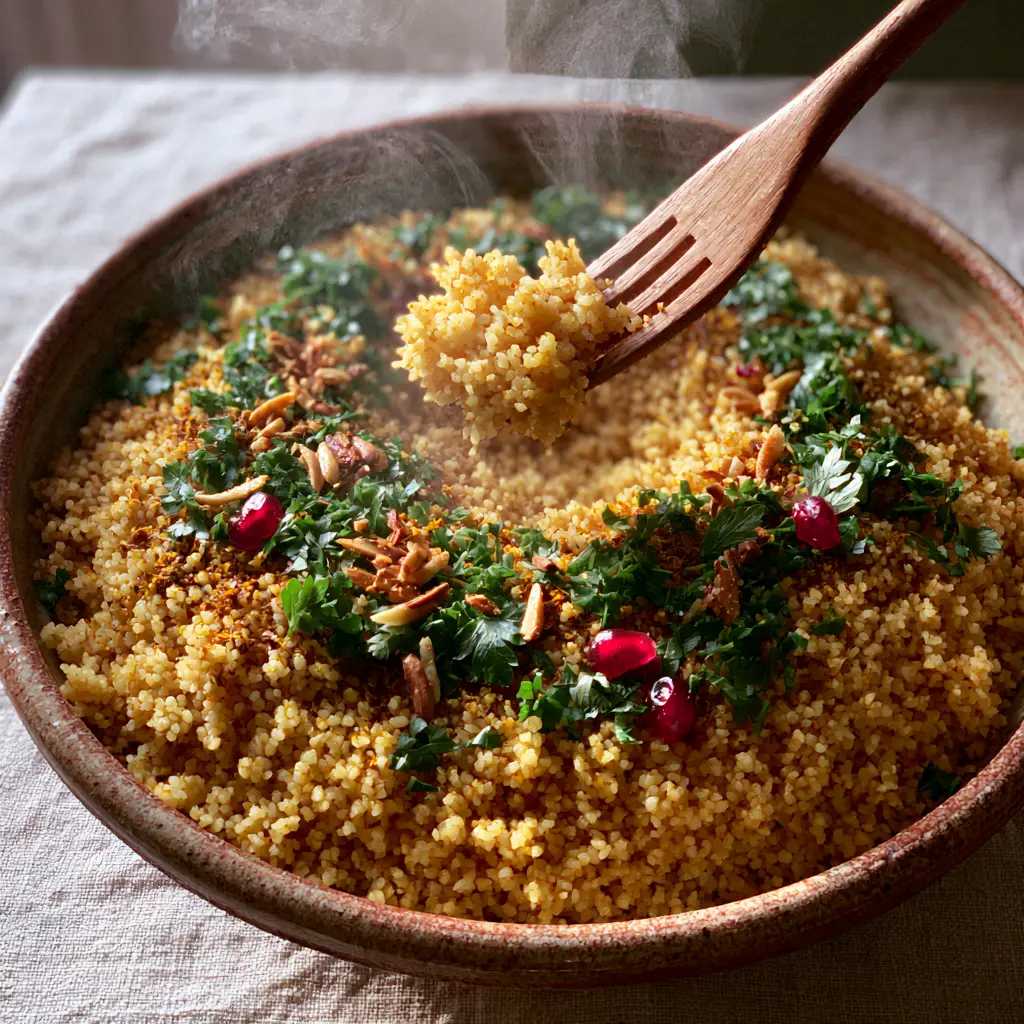
This Moroccan Couscous is the vibrant, aromatic centerpiece your dinner table has been missing. Imagine golden, individual semolina grains perfectly coated in an amber-hued Ras el Hanout spice blend, topped with the crunch of toasted almonds and the juicy pop of ruby-red pomegranate arils.
Whether you are serving this alongside authentic Moroccan Msemen or as a base for grilled meats, the texture is the star of the show. We are talking about an incredibly light, airy cloud of grains—no clumps, no sogginess—just pure Mediterranean magic that looks like it stepped right out of a professional food shoot.
Why This Fluffy Moroccan Couscous Works
- Perfect Grain Separation: We use a specific steaming and “fork-fluffing” technique to ensure every grain of Moroccan Couscous remains distinct and airy.
- Complex Flavor Profile: The Ras el Hanout provides a warm, earthy depth that balances the sweetness of the pomegranate and the freshness of the parsley.
- Fast-Casual Elegance: It looks like high-end restaurant fare, especially when served in a rustic ceramic bowl with wisps of rising steam, but it takes less than 15 minutes.
- Textural Contrast: The combination of soft semolina, crunchy toasted slivered almonds, and snappy pomegranate seeds creates a professional-grade mouthfeel.
The Secret Ingredients for Aromatic Moroccan Couscous
Dried Moroccan Couscous: Specifically, the fine-grained semolina version. This is not the large, pearl-like Israeli variety. We want those tiny, delicate grains that absorb flavor instantly.
Ras el Hanout: This “head of the shop” spice blend is essential. It usually contains cinnamon, cumin, coriander, and cardamom, giving the grains that signature rich amber color seen in our visual blueprint.
Chicken or Vegetable Broth: Never use plain water. To achieve the depth required for an elite Moroccan Couscous, the grains must hydrate in a seasoned liquid. Use 1 cup (240ml) of high-quality stock.
Extra Virgin Olive Oil or Butter: You need 1 tablespoon (15ml) of fat to coat the grains before adding liquid. This “sealing” process is the technical secret to preventing clumps.
Fresh Garnishes: You will need 1/4 cup (10g) of finely chopped flat-leaf parsley and 1/4 cup (40g) of toasted slivered almonds for that essential crunch.
Pomegranate Arils: These add a “ruby” visual pop and a burst of acidity that cuts through the warm spices.
Step-by-Step: Mastering the Fluff
1. Toasting the Spices and Grains
In a medium pot, heat your olive oil over medium heat. Add 1 teaspoon (2g) of Ras el Hanout and a pinch of salt. Let the spices bloom in the fat for 30 seconds until the kitchen smells like a Moroccan spice market.
Add 1 cup (170g) of dry Moroccan Couscous. Stir the grains constantly for 1-2 minutes. You want every tiny semolina grain to be glistening and coated in that amber spice oil. This ensures they don’t stick together later.
2. The Perfect Hydration Ratio
Bring 1 cup (240ml) of broth to a rolling boil. Pour the boiling liquid over the toasted grains. Immediately remove the pot from the heat and cover it with a tight-fitting lid.
Let it sit undisturbed for 5 minutes. Do not peek! The rising steam trapped inside is what gently swells the grains into that light, airy texture we are aiming for.
3. The “Wooden Fork” Technique
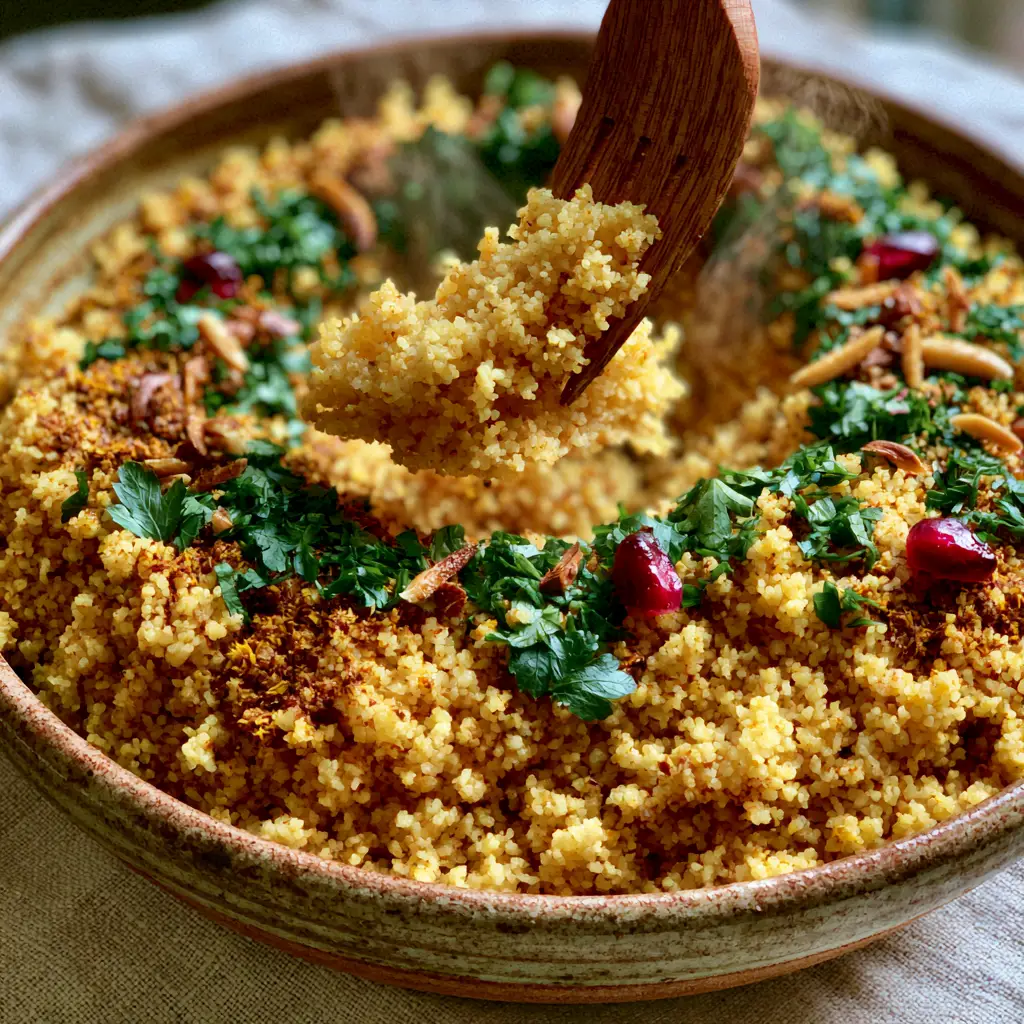
Once the 5 minutes are up, remove the lid. You will see a solid-looking block of grains—don’t panic. Use a wooden fork to gently rake the surface. The grains should fall away from each other like a cloud.
Gently toss in your finely chopped parsley and half of the toasted almonds. The heat from the Moroccan Couscous will slightly wilt the herbs, releasing their fragrance.
Expert Tips for Success
- Don’t Over-Liquid: The ratio for Moroccan Couscous is strictly 1:1. Too much liquid results in a mushy porridge rather than distinct grains.
- Quality of Ras el Hanout: Since this is the primary flavor, ensure your spice blend is fresh. If it’s over six months old, the aromatic oils have likely faded.
- Wait to Garnish: Add the pomegranate arils only at the very last second. If you stir them in while the grains are piping hot, they may bleed their red juice and discolor the golden semolina.
- Use a Wide Vessel: If you have a rustic ceramic bowl or a wide shallow dish, use it. Crowding the couscous in a deep, narrow pot can cause the bottom layer to become compacted.
What to Serve With Moroccan Couscous
This dish is incredibly versatile. For a complete North African feast, serve it with zesty chermoula sauce drizzled over grilled fish or marinated chicken skewers.
If you prefer a lighter lunch, pair it with a crisp lemon parmesan salad or some pan-seared salmon cakes for a protein boost. The earthy grains also pair beautifully with lemon roasted Greek potatoes for a Mediterranean mezze spread.
Storage, Reheating & Freezing
To Store: Keep leftovers in an airtight container in the fridge for up to 4 days. The flavors of the Ras el Hanout actually deepen overnight!
To Reheat: Avoid the microwave if possible, as it can dry out the semolina. Instead, place the Moroccan Couscous in a pan with a splash of broth, cover, and steam on low heat for 2 minutes.
To Freeze: You can freeze plain cooked couscous for up to 3 months. Thaw in the fridge before reheating and adding fresh garnishes.
Frequently Asked Questions
Traditional Moroccan Couscous is made from wheat semolina. For a gluten-free version, you can substitute with fonio or a certified gluten-free couscous blend, though cooking times may vary.
The secret is to bloom your Ras el Hanout in olive oil before adding the couscous. This stains the oil, which then perfectly coats every individual grain.
No. Moroccan couscous consists of tiny grains that are steamed, whereas Pearl (Israeli) couscous is larger, toasted pasta that requires simmering in water like traditional pasta.
You can make a quick substitute by mixing equal parts ground cumin, coriander, ginger, and cinnamon with a pinch of allspice and cloves.
Mushy couscous is usually caused by using too much liquid or stirring it while it steams. Stick to the 1:1 ratio and let it sit covered and undisturbed for a full 5 minutes.
The Ultimate Fluffy Moroccan Couscous Recipe
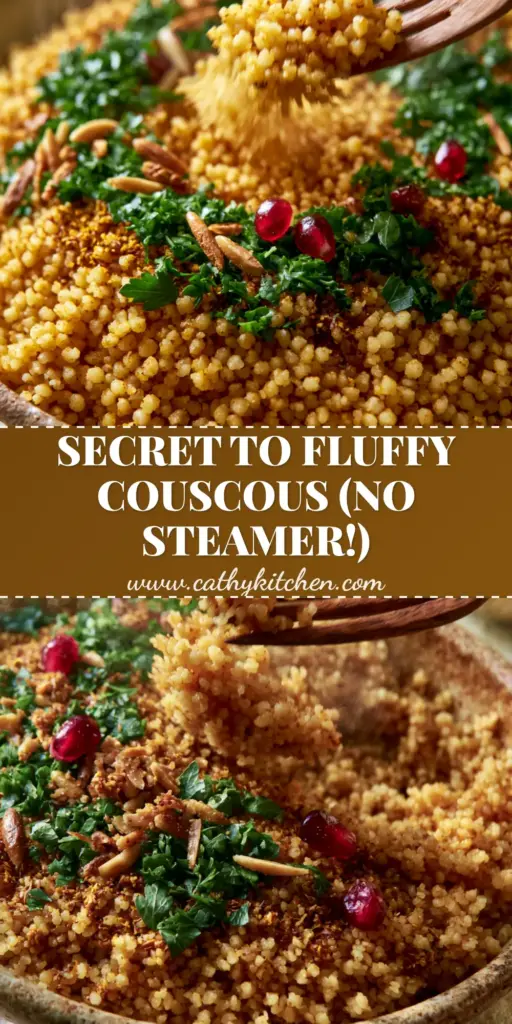
Moroccan Couscous: The Ultimate Fluffy Ras el Hanout Recipe
Ingredients
Equipment
Method
- Heat oil in a pot, add Ras el Hanout and dry couscous, stirring until grains are coated in amber oil.
- Pour boiling broth over grains, cover immediately, and remove from heat for 5 minutes.
- Using a wooden fork, lift and separate the light grains while adding parsley, almonds, and pomegranate seeds.
Notes
Wait to add pomegranate until serving to keep the colors vibrant.
Share Your Culinary Masterpiece!
Did your Moroccan Couscous turn out as fluffy as a cloud? We want to see! Pinterest is all about the community, so please head over to our pin and upload a photo of your finished dish in the “Tried It” section.
Be sure to follow @cathy_kitchen_official for more Pinterest-viral recipes and expert culinary tips. If you loved the warmth of the Ras el Hanout, don’t forget to leave a 5-star rating on the recipe card above. Happy cooking!