There is a specific kind of magic found in a sun-drenched Greek tavern, and it usually arrives in a humble, shallow ceramic bowl. Horiatiki, the traditional Greek village salad, is more than just a side dish; it is a masterclass in the power of high-quality, raw ingredients. When you prepare it correctly, you aren’t just tossing vegetables; you are creating a vibrant, living emulsion of flavor.
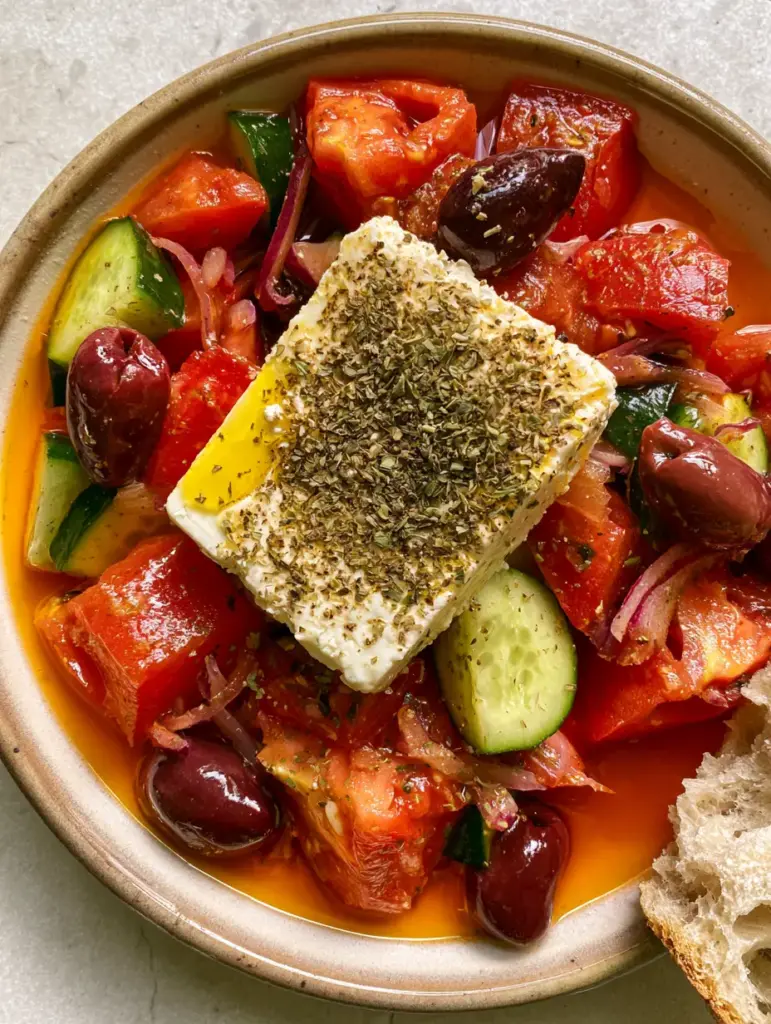
This recipe focuses on the visual and textural hallmarks of a true Athenian table: the deep-red jagged chunks of vine-ripened tomatoes, the translucent slivers of red onion, and that iconic, heavy rectangular slab of creamy sheep’s milk feta. But the true secret—the part that keeps you coming back for more—is the “salata juice.” This golden-orange pool of liquid gold at the bottom of the bowl is where the extra virgin olive oil meets the natural brine of the tomatoes.
Whether you are serving this alongside a Mediterranean feast or enjoying it as a light summer lunch, our Horiatiki recipe ensures every bite is balanced, crisp, and undeniably authentic. Grab a piece of torn, porous sourdough bread, because you won’t want to leave a single drop of that emulsion behind.
Why This Horiatiki Recipe is the Only One You Need
- The Salata Juice Emulsion: We use a specific salting technique to draw out tomato juices, creating that signature golden-orange pool of “liquid gold” described in our visual blueprint.
- Authentic Texture: No dainty dices here. We focus on jagged, chunky cuts and unpeeled English cucumbers for a rustic, handheld-photo-ready aesthetic.
- The Feta Statement: Forget the crumbles. This recipe features a single, thick slab of sheep’s milk feta, heavily dusted with coarse dried oregano, exactly as served in Greece.
- Zero Fluff: This is a traditional Horiatiki—no lettuce, no fillers, just pure Mediterranean excellence.
The Anatomy of a Perfect Greek Village Salad
Vine-Ripened Tomatoes: You need 1.5 lbs (680g) of the deepest red, most fragrant tomatoes you can find. Their natural acidity and juice are the primary foundation for the emulsion at the base of the bowl.
English Cucumber: One large (300g) cucumber, kept unpeeled for that vibrant green rim. The thick half-moon slices provide the necessary crunch to contrast the soft tomatoes.
Red Onion: A small (100g) bulb, sliced into translucent, paper-thin slivers. These provide a sharp, piquant bite without overpowering the delicate sweetness of the vegetables.
Kalamata Olives: Use 1/2 cup (75g) of whole, glossy olives. Keeping them whole prevents the brine from muddying the colors of the other ingredients while maintaining their natural sheen.
Sheep’s Milk Feta: One 7oz (200g) solid rectangular block. Sheep’s milk feta is traditional because it offers a creamy, tangy profile that holds its shape better than cow’s milk varieties.
Extra Virgin Olive Oil (EVOO): 1/2 cup (120ml) of the highest quality “liquid gold” you can afford. This isn’t just a dressing; it is a primary ingredient that carries the flavor of the oregano and tomato juice.
Dried Oregano: 1 tbsp (3g) of coarse, heavy dried flakes. Oregano is the soul of the Horiatiki, providing an earthy, floral aroma that blooms when it hits the oil.
Sea Salt & Red Wine Vinegar: 1 tsp (5g) salt and 1 tbsp (15ml) vinegar. The salt is scientifically required to macerate the tomatoes, while the vinegar adds the necessary brightness.
The Essential Tools for a Rustic Greek Masterpiece
To achieve the look of our handheld smartphone photo, you need a shallow ceramic bowl. A deep bowl will hide the beautiful layers of the Horiatiki and prevent the “salata juice” from being visible.
You will also need a very sharp chef’s knife. Achieving those translucent onion slivers and jagged tomato chunks requires a blade that can slice through skin without bruising the flesh. Finally, keep a piece of rustic sourdough bread nearby for the ultimate “mop-up” experience.
Mastering the Art of the Salata Juice Emulsion
Step 1: The Maceration Process
Begin by cutting your 1.5 lbs (680g) of tomatoes into large, jagged chunks. Do not worry about uniformity; the rustic nature is part of the charm. Place them in your shallow bowl and sprinkle with 1 tsp (5g) of sea salt.
Let the tomatoes sit for 5-10 minutes. This is the “Forensic Secret”—the salt draws out the moisture, creating the base for the tomato-oil emulsion that will pool at the bottom of the dish.
Step 2: Preparing the Crisp Components
While the tomatoes rest, slice your English cucumber into thick half-moons. Keep the skin on to ensure the high-resolution texture seen in the visual prompt. Add these to the bowl.
Next, shave your red onion into translucent slivers. If the onion is particularly pungent, you can soak the slivers in ice water for 5 minutes, but for a true Horiatiki, the raw bite is usually welcomed.
Step 3: Layering and Glossing
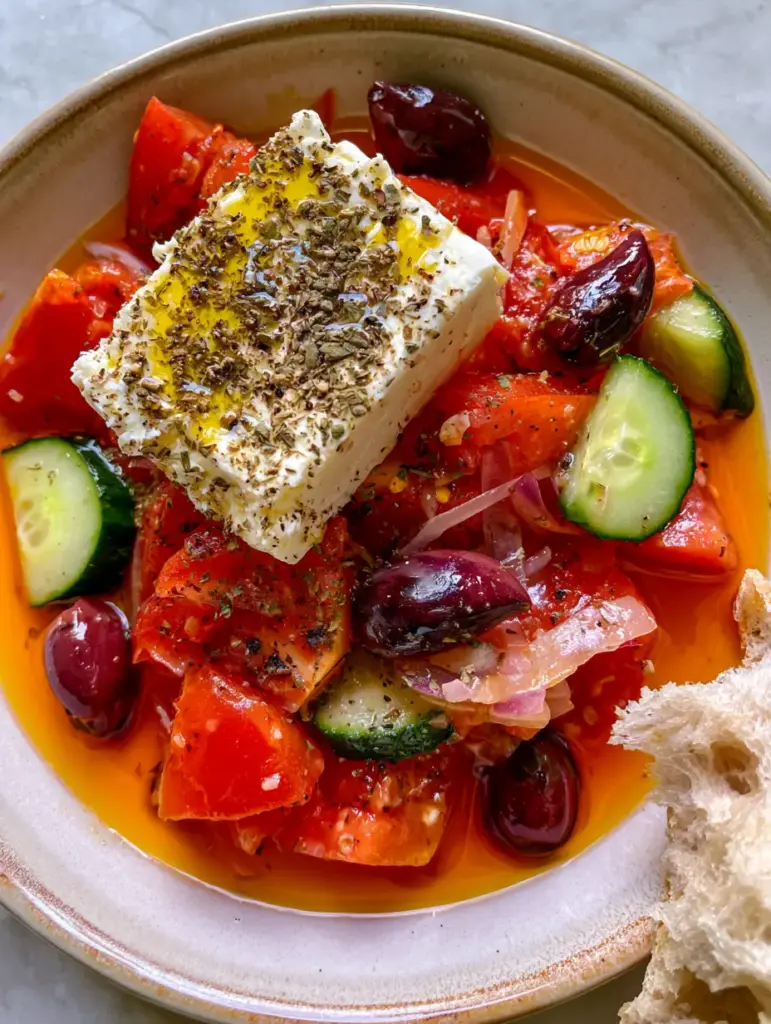
Scatter the 1/2 cup (75g) of whole Kalamata olives over the vegetables. Drizzle 1 tbsp (15ml) of red wine vinegar over the mix and toss very gently with your hands or a wooden spoon. You want to see the juices mixing with the vinegar.
Now, pour 1/4 cup (60ml) of the extra virgin olive oil over the vegetables. You should begin to see a vibrant, golden-orange emulsion forming at the bottom—this is your “salata juice.”
Step 4: The Feta Crowning
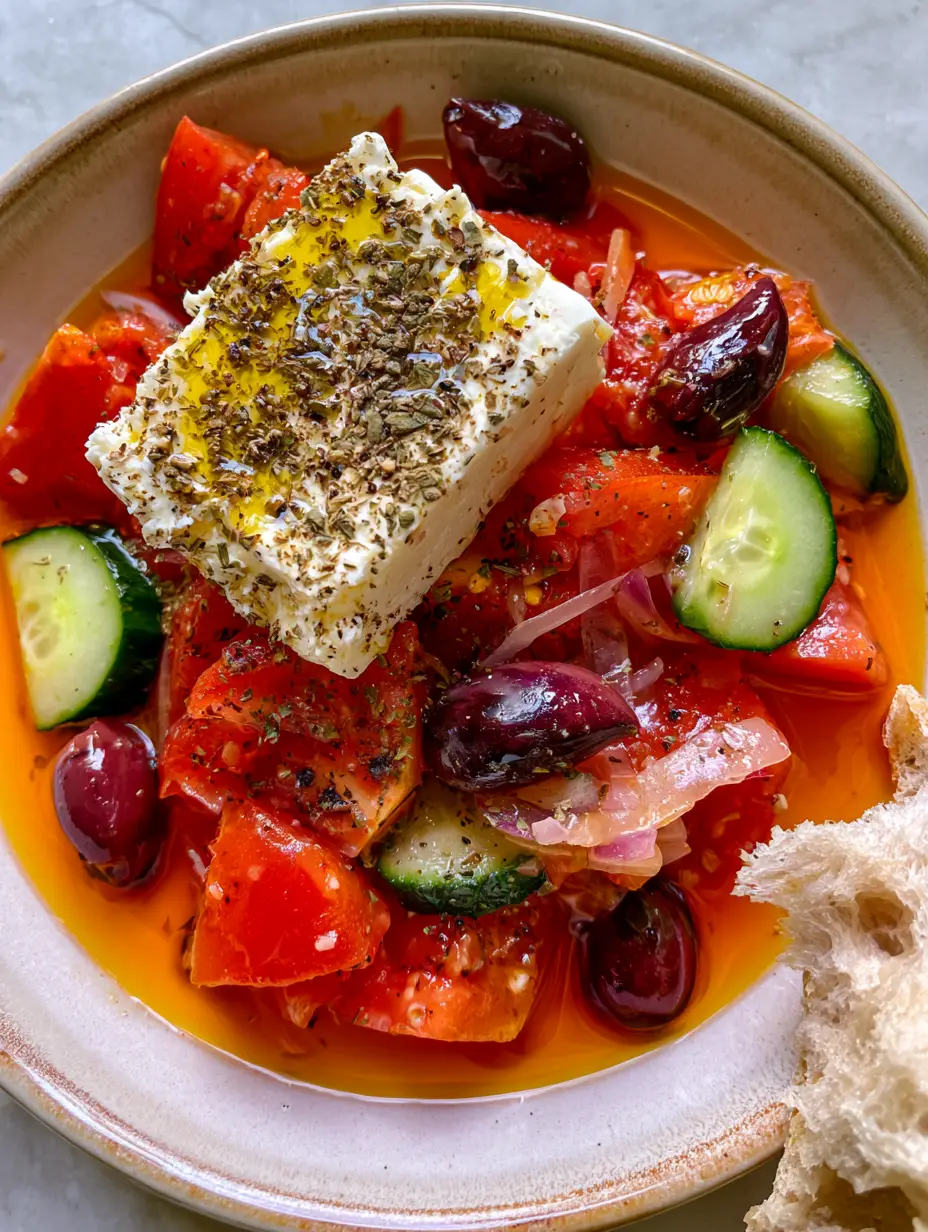
Place the entire 7oz (200g) slab of feta cheese prominently on top of the salad. Do not break it. Use the remaining olive oil to drizzle directly over the cheese, allowing the “liquid gold” to bead on the surface.
Finish with a heavy dusting of 1 tbsp (3g) of coarse dried oregano. The oregano should stick to the oiled surface of the feta and the glossy skins of the olives. Your Horiatiki is now ready for its close-up.
Secret Techniques for the Most Flavorful Greek Salad
- Temperature Matters: Never serve this salad fridge-cold. The flavors of the EVOO and the tomatoes are best at room temperature.
- The “Sponge” Factor: Always serve with torn, porous sourdough. The bread is designed to submerge into the juices, absorbing the emulsion of oil and tomato.
- Quality of Oregano: If possible, use Greek dried oregano on the branch and crumble it yourself for the most potent aromatic release.
- Balance the Acid: If your tomatoes are exceptionally sweet, add an extra splash of red wine vinegar to maintain that signature tang.
Preparing Your Greek Feast in Advance
The Horiatiki is best enjoyed within 30 minutes of assembly. However, you can prep the ingredients separately. Store the sliced cucumbers and onions in airtight containers in the fridge for up to 24 hours.
Do not salt the tomatoes or add the oil until you are ready to serve. Once the salt hits the tomatoes, the clock starts on the texture of the vegetables. Leftovers can be stored for 1 day, but the cucumbers will lose their crispness and the salad will become very watery.
The Best Mediterranean Pairings for Your Salad
This salad is the ultimate refreshing side for heavier Mediterranean dishes. It pairs beautifully with a lemon-herb chicken orzo pasta or even a decadent buttery lobster roll for a fusion summer lunch.
If you are looking for more vegetable-forward sides, consider serving it alongside crunchy cucumber chips or a zucchini and goat cheese stack. The acidity of the Horiatiki cuts through the richness of cheese and fried elements perfectly.
Your Most Burning Horiatiki Questions Answered
While you can, it isn’t authentic Horiatiki style. A single slab prevents the cheese from dissolving into the dressing, allowing guests to break off pieces as they eat, which preserves the clean look of the tomato-oil emulsion.
For an authentic Horiatiki, the cucumbers are typically left unpeeled or partially peeled in stripes. The skin provides a necessary bitter note and a crisp texture that contrasts with the soft, juicy tomatoes.
Traditional Horiatiki (village salad) never contains lettuce. It is made of tomatoes, cucumbers, onions, olives, and a block of feta. ‘Greek Salad’ in many Western countries often adds Romaine lettuce and a vinaigrette, which is not authentic to the village style.
Kalamata olives are the gold standard. They should be whole and pits-in for the best flavor, though pitted is acceptable for ease of eating. Their briny, meaty texture is essential for balancing the sweetness of the tomatoes.
A little liquid is good—that’s the ‘salata juice.’ However, if it’s excessive, your tomatoes might be over-ripe or you may have added too much salt too early. Using English cucumbers instead of standard ones also helps, as they have fewer seeds and lower water content.
The Ultimate Authentic Horiatiki Recipe Card
Horiatiki: The Authentic Greek Village Salad Recipe
Ingredients
Equipment
Method
- Place jagged tomato chunks in a shallow ceramic bowl and sprinkle with sea salt. Let sit for 10 minutes until a pool of juice forms.
- Add the thick cucumber half-moons, thin red onion slivers, and whole olives to the bowl.
- Drizzle with red wine vinegar and half of the olive oil. Toss gently to combine the oil with the tomato juices, creating a golden-orange emulsion.
- Place the feta slab on top. Drizzle with the remaining olive oil and a heavy dusting of oregano. Serve with torn sourdough bread.
Notes
Ensure the feta is sheep's milk for the most authentic, creamy texture.
Closing & Call to Action
Bringing the flavors of the Mediterranean into your kitchen starts with the perfect Horiatiki. It is a dish that celebrates simplicity, freshness, and the joy of a good piece of bread dipped in olive oil. We hope this recipe becomes a staple at your summer gatherings!
Did you manage to capture that perfect “salata juice” pool? Let us know in the comments below! Don’t forget to sign up for our newsletter for more authentic recipes, and be sure to share your creations with us on Pinterest.