The perfect Stuffed eggplant is a masterclass in contrasting textures and deep, savory flavors. Imagine a vegetable transformed into a vessel of caramelized gold, cradling a rich, seared protein filling that has been simmered into a concentrated reduction. This isn’t just a meal; it is a visual and culinary journey that brings the warmth of a Mediterranean summer to your table.
In this recipe, we focus on achieving that elusive professional finish: dark, blistered skins that hold their shape against a lush, velvety interior. By mastering the art of the sear and the reduction, you will create a dish that looks like a high-end restaurant feature but feels like a comforting home-cooked classic.
Whether you are hosting a dinner party or looking for a transformative weeknight meal, this recipe delivers on every promise. The bright pop of fresh parsley and the salty tang of feta cheese cut through the richness of the roasted eggplant, creating a perfectly balanced bite every single time.
The Secrets to Achieving a Non-Mushy, Caramelized Texture
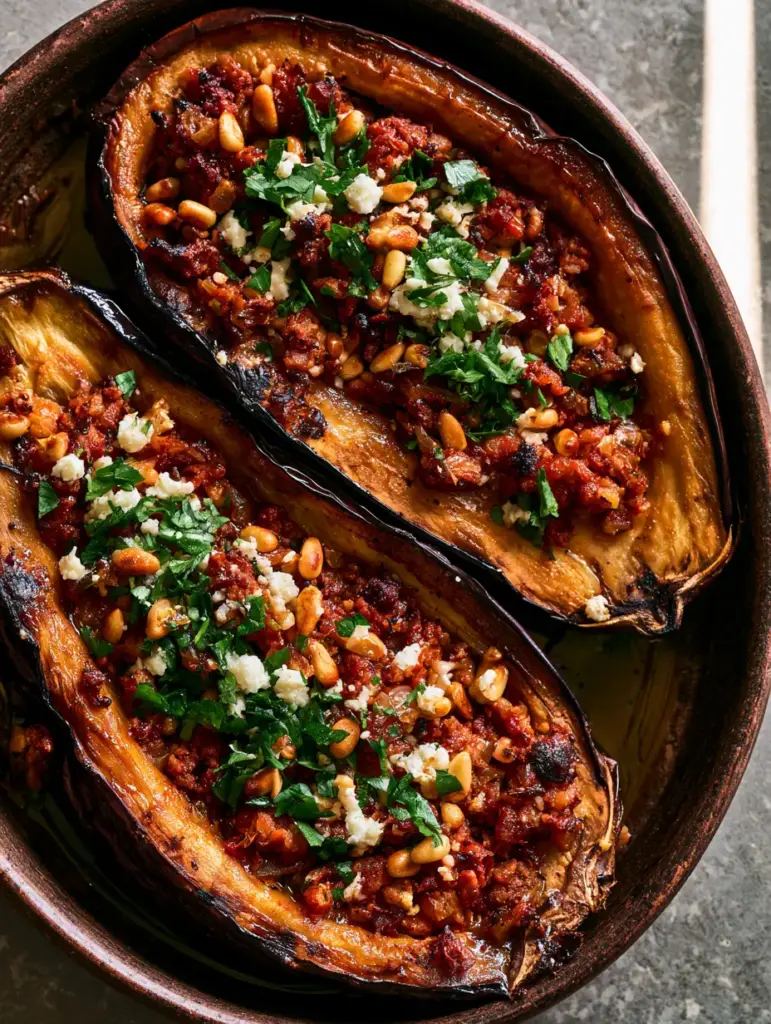
- Structural Integrity: By roasting the eggplant halves at high heat before stuffing, we ensure the skin becomes slightly blistered and strong enough to hold the savory beef filling without collapsing.
- Maillard Magic: We don’t just cook the ground beef; we sear it until deep brown crumbles form, providing the “meaty” bite seen in professional food photography.
- The Tomato Reduction: Instead of a watery sauce, we use a thick tomato paste reduction to bind the aromatics, ensuring the filling is intense and concentrated rather than runny.
- Visual Contrast: The heavy sprinkle of bright green flat-leaf parsley and snowy white feta provides a striking visual against the rustic dark purple of the eggplant.
- Aromatics Foundation: Sautéing onions and garlic until they are translucent and slightly charred at the edges provides the essential flavor base for the entire dish.
The Essential Components for This Mediterranean Masterpiece
Every ingredient in this Stuffed eggplant serves a specific culinary purpose, contributing to the final visual and flavor profile described in our blueprint. Below is the breakdown of what you will need to achieve these results.
Medium-Large Eggplants: Choose firm eggplants with shiny, unblemished skin. Their dark purple exterior will blister beautifully in the oven, providing a sturdy base for the stuffing.
Ground Beef (80/20): A slightly higher fat content is necessary to achieve those crispy, seared crumbles. The fat renders out, allowing the beef to fry in its own juices for maximum flavor.
Yellow Onion and Fresh Garlic: These are your flavor workhorses. Once finely diced and sautéed, they melt into the beef, providing a sweet and pungent backbone to the stuffing.
Double-Concentrated Tomato Paste: This is the secret to the “thick reduction.” It provides a deep umami punch and a rich reddish-brown color that coats the beef perfectly.
Crumbled Feta Cheese: Use a high-quality sheep’s milk feta for that signature salty tang. It provides the necessary white contrast against the darker roasted elements.
Flat-Leaf Parsley: Unlike curly parsley, flat-leaf (Italian) parsley has a robust, peppery flavor. It adds a “bright green” freshness that elevates the dish’s visual appeal.
Pine Nuts: These must be toasted until golden brown. They provide a buttery, nutty crunch that offsets the soft texture of the caramelized eggplant flesh.
Extra Virgin Olive Oil: You will need this for both the high-heat roasting and the final “glistening” drizzle. It adds a fruity, peppery finish to the dish.
Foundational Seasonings: Fine sea salt for “sweating” the eggplant and cracked black pepper for a sharp, aromatic finish are non-negotiable for professional results.
Kitchen Tools for Professional-Grade Roasting
To achieve the results seen in our Mediterranean-inspired visual, you will need a few specific tools. A rustic dark ceramic baking dish is ideal, as ceramic retains heat evenly, helping the eggplant skins blister without burning the bottoms.
A heavy-bottomed cast iron skillet is recommended for searing the ground beef. Cast iron holds heat better than stainless steel, ensuring you get those seared crumbles rather than steamed meat. You will also need a sharp Chef’s knife for the precision chopping of the parsley and onions.
Finally, a silicone pastry brush is helpful for evenly coating the scored eggplant flesh with olive oil, ensuring every millimeter of the interior becomes caramelized and golden brown.
Mastering the Roast: Step-by-Step Instructions
Phase 1: Preparing the Eggplant Vessels
Start by slicing your eggplants in half lengthwise through the green stem. Use a sharp knife to score the flesh in a crosshatch pattern, being careful not to pierce the skin.
Generously sprinkle the flesh with 1 tsp (5g) of sea salt. Let them sit for 20 minutes; this “sweating” process removes excess moisture, preventing the eggplant from becoming mushy and ensuring a dense, meaty texture after roasting.
Pat the eggplants dry with a paper towel. Brush the scored flesh with 2 tbsp (30ml) of extra virgin olive oil. Place them cut-side down in your ceramic dish and roast at 400°F (200°C) for 25-30 minutes until the skin is blistered and the flesh is golden.
Phase 2: Searing the Mediterranean Stuffing
While the eggplants roast, heat 1 tbsp (15ml) of oil in your skillet over medium-high heat. Add 1 lb (450g) of ground beef. Do not move the meat for at least 3 minutes; you want a deep, brown crust to form.
Break the meat into crumbles and add 1 medium (150g) finely diced onion and 4 cloves (12g) of minced garlic. Sauté until the onions are translucent and the garlic is fragrant, approximately 5 minutes.
Stir in 3 tbsp (45g) of tomato paste. Cook the paste for 2 minutes—this “frying” of the paste removes the raw metallic taste and deepens the color. Add 1/4 cup (60ml) of water or beef stock and simmer until a thick, rich reduction forms that clings to the beef.
Phase 3: Assembly and The Final Char
Remove the eggplants from the oven and flip them over. Use a spoon to gently press down the caramelized center, creating a “well” for the filling. Divide the beef mixture evenly among the halves.
Return the dish to the oven for another 10 minutes. This allows the flavors to meld and the edges of the beef to achieve a slight char, echoing the charred edges of the eggplant skin.
Finishing Touches: The Art of Garnish
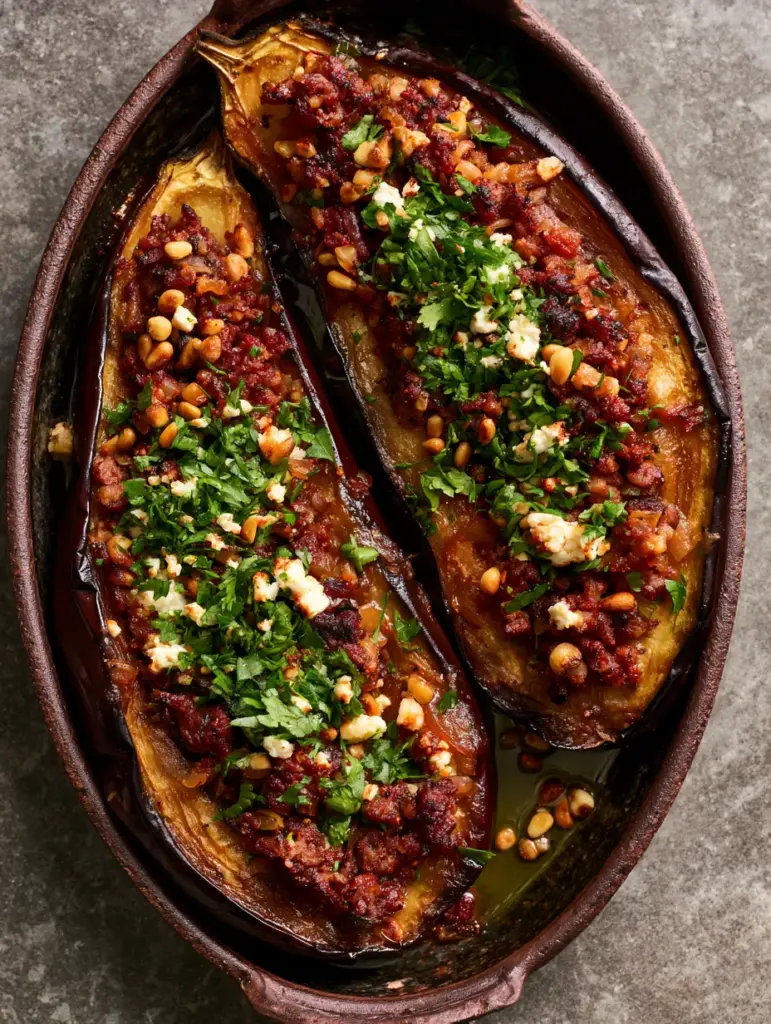
The visual success of this Stuffed eggplant relies on the final assembly. Once removed from the oven, immediately sprinkle the 1/2 cup (75g) of crumbled feta over the hot filling so it softens slightly but maintains its white color.
Add a heavy layer of 1/4 cup (15g) freshly chopped flat-leaf parsley. The heat from the dish will release the parsley’s aroma without wilting it completely. Scatter 2 tbsp (20g) of toasted pine nuts across the top for that golden, professional finish.
The final step is the “glistening” drizzle. Use your best quality extra virgin olive oil and lightly zig-zag it over the eggplant. Finish with a generous crack of black pepper to highlight the charred edges and soft highlights of the dish.
Expert Tips for the Ultimate Mediterranean Result
- Salt is Vital: Never skip the sweating process. It is the scientific difference between a soggy eggplant and a perfectly dense, caramelized one.
- Toast the Nuts: Pine nuts go from raw to burnt in seconds. Toast them in a dry pan over medium heat, shaking constantly, until they smell like popcorn and look golden.
- Texture Check: If your eggplant flesh feels too firm after the first roast, give it another 5 minutes. It should be soft enough to scoop but firm enough to hold its shape.
- Acid Balance: If your tomato reduction feels too heavy, a tiny squeeze of lemon juice at the end can brighten the entire beef mixture.
Optimal Storage and Reheating Guidelines
This dish stores remarkably well. Place leftovers in an airtight container in the refrigerator for up to 3 days. The flavors of the beef and tomato reduction actually deepen over time.
To reheat, avoid the microwave, as it can make the eggplant skin rubbery. Instead, place the halves back in a ceramic dish, cover with foil, and heat at 350°F (175°C) for 15 minutes. Remove the foil for the last 2 minutes to crisp up the pine nuts again.
We do not recommend freezing this specific recipe. The high water content of eggplant means that once thawed, the cellular structure collapses, resulting in a mushy texture that loses the visual appeal of the original roast.
What to Serve with Mediterranean Stuffed Eggplant
Because this Stuffed eggplant is quite rich and savory, it pairs best with bright, acidic side dishes. A traditional crisp Greek salad is the most authentic choice, as the vinegar and fresh vegetables provide a sharp contrast to the roasted eggplant.
For a more vegetable-forward spread, you might consider serving this alongside a traditional Horiatiki or even some zucchini and goat cheese stacks for a variety of textures. If you are looking for something lighter to start the meal, these crunchy cucumber chips offer a wonderful textural prelude.
If you are serving this as part of a larger Mediterranean feast, a side of lemon chicken orzo can help stretch the meal for more guests while staying within the same flavor profile.
Frequently Asked Questions
Absolutely. Ground lamb is highly authentic for Mediterranean stuffed eggplant and provides a richer, gamier flavor that pairs beautifully with feta and pine nuts.
The secret is ‘sweating’ the eggplant with salt for 20 minutes before roasting. This removes excess moisture and ensures the flesh remains dense and meaty rather than watery.
No. The skin is essential for structural integrity. When roasted properly, it becomes tender and slightly charred, providing a beautiful visual and textural contrast.
It is a technique where you ‘fry’ tomato paste with aromatics and a small amount of liquid until it thickens into a concentrated, glossy paste that coats the meat.
Pre-roasting allows the skin to blister and the flesh to caramelize at high heat, which wouldn’t happen if you baked it only after adding the moist filling.
The Ultimate Stuffed Eggplant Recipe Card
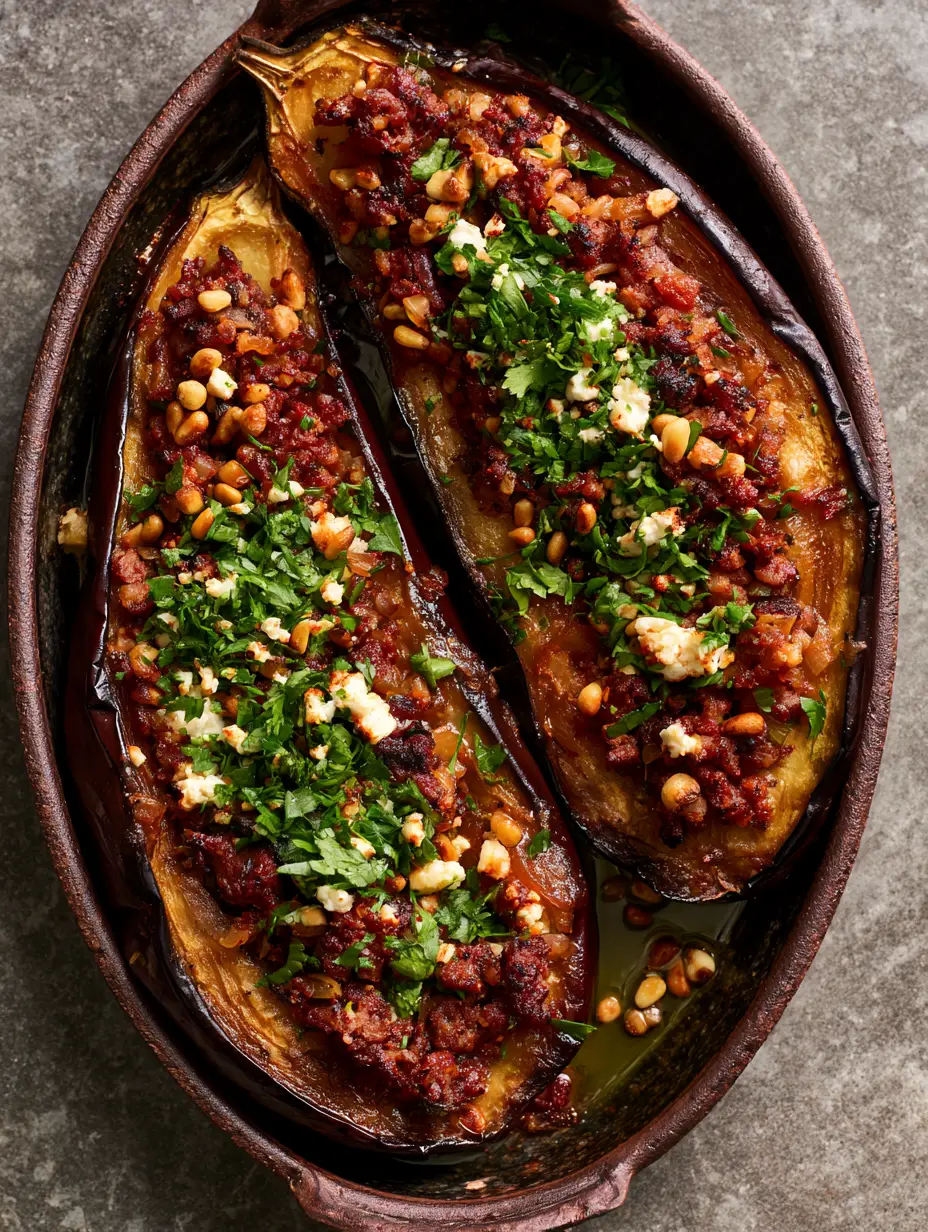
Stuffed Eggplant with Mediterranean Ground Beef, Feta, and Toasted Pine Nuts
Ingredients
Equipment
Method
- Score the eggplant flesh in a diamond pattern, sprinkle with salt, and let sit for 20 mins. Pat dry to remove moisture.
- Brush with olive oil and roast cut-side down at 400°F (200°C) for 25-30 mins until the skin blisters and flesh is golden brown.
- In a cast iron skillet, sear the ground beef crumbles over high heat until a deep brown crust forms.
- Add onion and garlic, sautéing until translucent. Stir in tomato paste and a splash of water to create a thick reduction.
- Fill the eggplant wells with the beef mixture. Bake for an additional 10 mins at 400°F (200°C).
- Top with crumbled feta, toasted pine nuts, fresh parsley, and a heavy drizzle of extra virgin olive oil.
Notes
Toast pine nuts in a dry pan for 2-3 minutes until golden brown for maximum flavor.
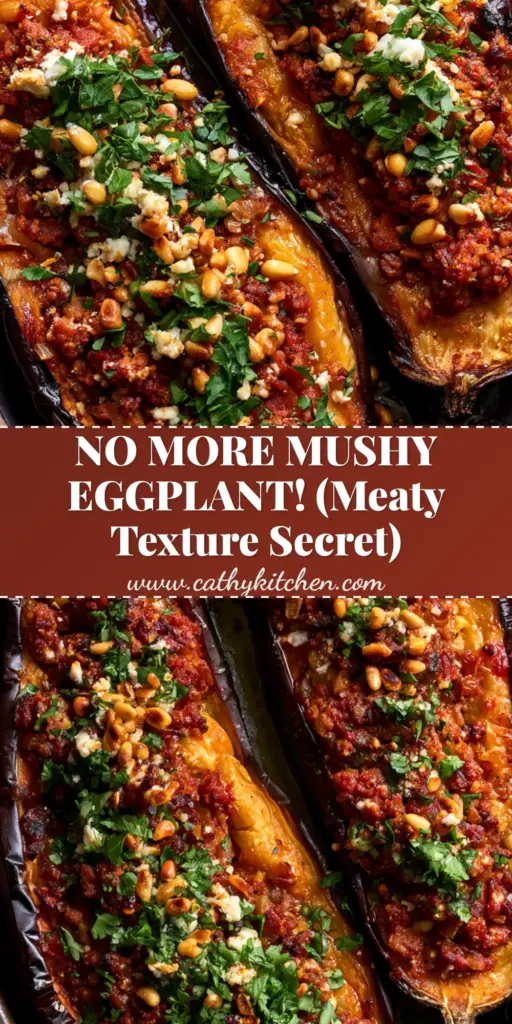
Bring the Mediterranean to Your Kitchen Today!
There is nothing quite as satisfying as pulling a bubbling, aromatic tray of Stuffed eggplant out of the oven. This dish captures the essence of rustic Mediterranean cooking: simple ingredients, bold techniques, and a focus on natural beauty. The combination of the seared beef, the salty feta, and the buttery pine nuts creates a symphony of flavor that you’ll want to make again and again.
If you enjoyed this recipe, please leave a comment below and let us know how your eggplant turned out! We love seeing your kitchen successes. Don’t forget to share your photos and save this recipe to your favorite boards on Pinterest so you always have it on hand for your next dinner party.